BYD's Yangwang U9X Hits 503 km/h, First Production Car Past 500
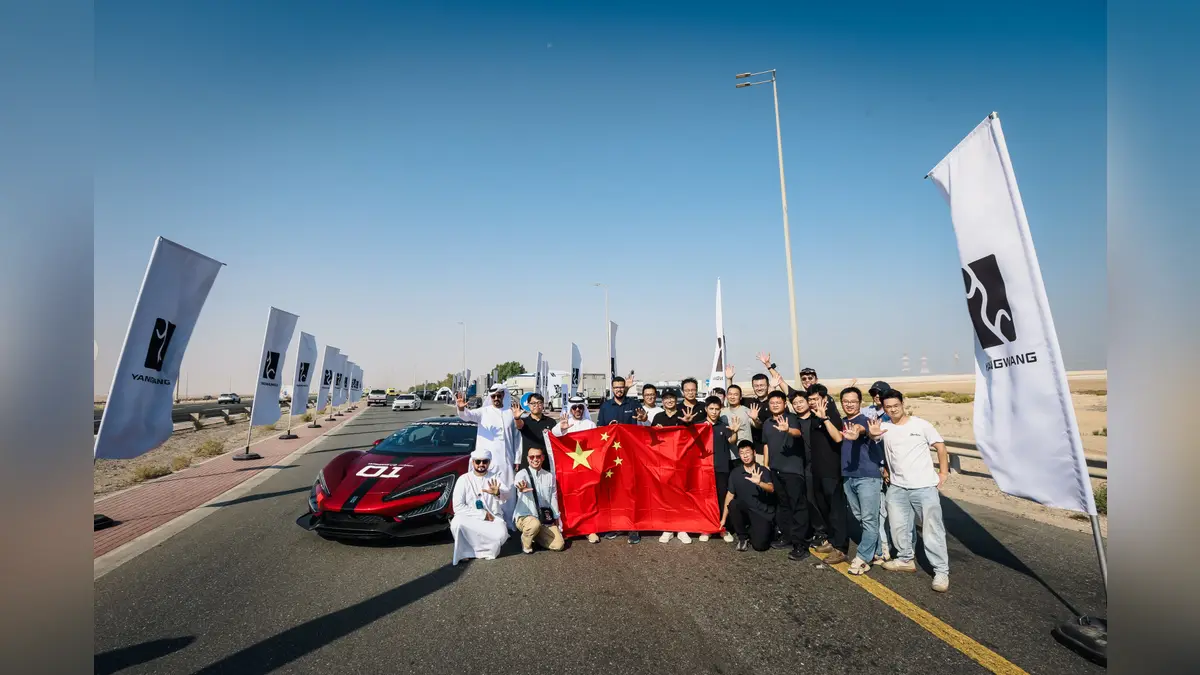
A BYD Yangwang U9X has recorded a top speed of 503.17 km/h, the company said, making it the first production car to break the 500 km/h barrier. The figure, reported by Chinese technology and lifestyle outlets, resets a record the same model had already been chasing and pushes an electric hypercar into territory long reserved for a handful of combustion-engine exotics.
The Yangwang badge is BYD’s most expensive line, a deliberate move upmarket by a company better known for affordable plug-in hybrids and mass-market electric vehicles. The U9X is its flagship performance model, built around a four-motor electric drivetrain that dispatches power to each wheel independently. That architecture is what makes such speeds plausible in a road-legal car: electric motors deliver torque almost instantly, and software can meter it wheel by wheel far faster than a mechanical differential.
Reaching 500 km/h is not simply a matter of a bigger motor. At those speeds aerodynamic drag rises with the square of velocity, so the power needed climbs steeply, and tire integrity, battery thermal management and body stiffness all become limiting factors. Chinese outlets framed the run as evidence of progress in electric drive technology and whole-vehicle engineering rather than a one-off stunt, pointing to the battery, cooling and chassis work that a record attempt exposes.
The timing matters for the global market. Chinese carmakers have spent the past few years winning volume in Europe, Southeast Asia and Latin America on price and software, but brand prestige at the very top has stayed with established European names. A headline speed record is a cheap, legible way to challenge that hierarchy. It gives BYD a talking point that does not depend on a showroom or a dealer network, and it signals to buyers that the company can engineer beyond the family segment.
There is a gap between a record run and a product people can use. The U9X is a low-volume halo car, and the conditions of the 503.17 km/h attempt — the test surface, the tires and any modifications — will be scrutinized by rivals and enthusiasts. Chinese performance claims have drawn skepticism abroad before, and a number alone does not settle questions about durability, safety at speed or how the car behaves on an ordinary road.
Still, halo cars have a habit of lifting the brand beneath them. Technologies tested at the limit — better cooling, higher-voltage systems, more precise motor control — tend to migrate down the range over time. For BYD, the value of the U9X may lie less in how many it sells than in what it proves about the company’s engineering ceiling and what it lends to cheaper models wearing the same badge.
Expect the record to be contested. Rival hypercar makers have their own speed programs, and independent verification of the run will be the next test. What to watch is whether the figure is ratified under recognized conditions and whether BYD starts citing U9X-derived technology in mainstream models — the point at which a record becomes a product story rather than a headline.