China's Baijiu Stocks Bounce, But the Earnings Say Otherwise
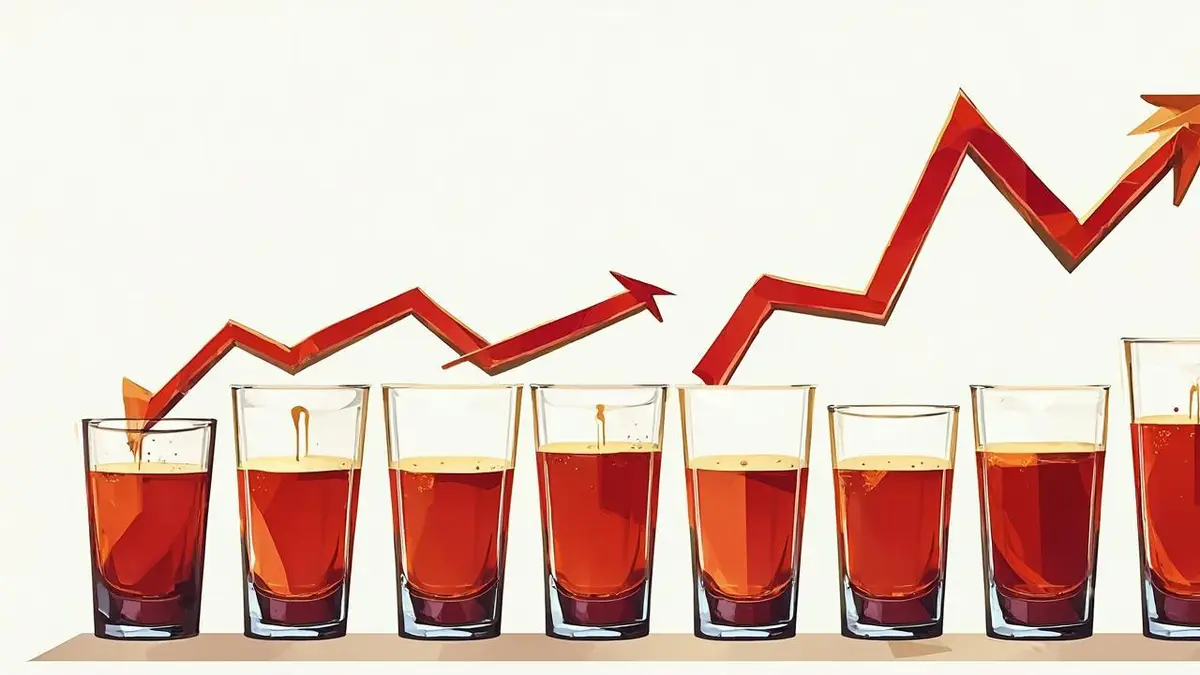
China’s baijiu sector has spent the past week giving investors whiplash. After a third-quarter reporting season in which most listed distillers posted underwhelming numbers, the sector staged a sharp rebound starting October 30. Then on November 4 the rally broke: by 13:47 the Tonghuashun baijiu index stood at 2,138.59 points, down 2.11% on the day, according to a research team at a southern Chinese business publication that tracks the liquor and new-consumption index.
Baijiu is China’s signature spirit, a clear grain liquor usually distilled from sorghum and served in small cups at banquets and business dinners. Its listed producers, led by Kweichow Moutai, have long been among the most valuable companies on the Shanghai and Shenzhen exchanges, prized for fat margins and pricing power. For years the sector was a reliable proxy for Chinese consumer confidence.
That confidence has been harder to read in 2026. The third-quarter results that landed in late October were, in the words of the same report, mostly not pretty. Slower demand at the mid-to-premium end, cautious wholesalers and a consumer base that is trading down have all weighed on revenue growth. When earnings disappoint, a rebound in the share price is less a verdict on the business than a bet on the next quarter.
The bounce that began on October 30 fits that pattern. Traders who had sold into the earnings season began buying back what looked cheap, and the index climbed for several sessions. The retreat on November 4 shows how fragile that positioning is: a few days of gains were enough to invite profit-taking, and the sector gave back part of the advance by early afternoon.
For global investors, baijiu is one of the cleanest windows into Chinese household spending. The companies sell almost entirely inside the country, their inventories sit with distributors who report back through channel checks, and their share prices react quickly to any hint that demand is stabilizing. A sustained recovery would signal that premium consumption is healing; another false start would suggest the cautious consumer is still in charge.
The sector also carries weight beyond its own market capitalization. Baijiu names are staples of major mainland equity benchmarks and of the portfolios that track them, so their swings ripple through index funds and exchange-traded products. When the baijiu index jumps and dives within a week, it is often a symptom of a broader debate about whether Chinese equities have bottomed.
What happens next will depend on two things the earnings season did not settle: whether distributors restock ahead of the year-end holiday season, and whether the largest distillers hold prices steady rather than discounting to move volume. Neither is visible in a single trading session. For now, the market’s message is ambivalence — a willingness to buy the dip, and an equally quick willingness to sell the bounce.