China's Auto Industry Faces a Wave of New Models and Deals
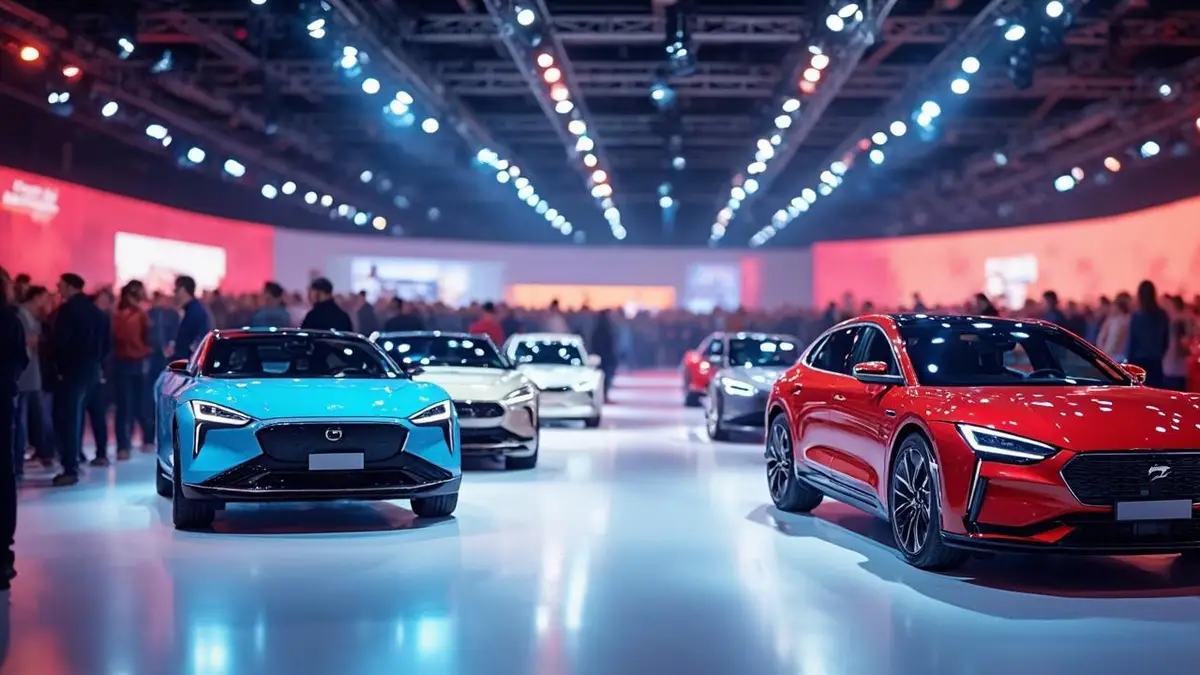
China’s auto market saw a flurry of activity this week, with nine new models hitting showrooms on a single day, a major restructuring between two state-owned automakers, and a high-profile adjustment in the partnership between tech giant Huawei and carmaker Seres. The developments underscore an industry under pressure, where fierce competition and slowing sales are forcing players to rethink strategies and join forces.
On September 23, nine new vehicles were launched or opened for pre-sale, including the Qijing GX7, Changan Qiyuan Q06, Denza Z9S, IM LS6 electric version, Geely Galaxy E5, Buick Zhijing E7 refresh, Wey Gaoshan Smart Edition, Great Wall Menglong PLUS, and Jetour Traveler 7. The timing, between the Mid-Autumn and National Day holidays, reflects automakers’ push for attention before the fourth quarter. However, the market is contracting: retail sales of passenger cars fell 22% year-on-year in the first 20 days of September, according to the China Passenger Car Association, though they rose 8% from the previous month.
In a significant corporate move, Guangzhou Automobile Group (GAC) announced a major asset restructuring with FAW Group. GAC will issue new shares to FAW in exchange for its stake in a joint venture, with FAW becoming GAC’s second-largest shareholder. While the specific joint venture was not disclosed, industry speculation centers on FAW Toyota, which could lead to a merger of GAC Toyota and FAW Toyota. The deal highlights a trend of consolidation as automakers seek scale to survive.
Meanwhile, Huawei’s automotive strategy is evolving. Richard Yu, Huawei’s managing director and chairman of its Intelligent Automotive Solution business unit, announced that the company will focus on four brands: Zunjie, Xiangjie, Zhijie, and Shangjie. This follows Seres’ decision to take over the AITO (Wenjie) brand’s operations, transitioning to a dedicated sales and service model. Seres chairman Zhang Xinghai said the new arrangement will enhance brand value and sales. Huawei founder Ren Zhengfei reiterated that “Huawei does not build cars” but will continue to provide intelligent solutions to partners, including Dongfeng Motor.
BYD, China’s largest electric vehicle maker, announced it has met its annual target for building fast-charging highway stations ahead of schedule. The company also celebrated the roll-off of its 100,000th new energy vehicle at its Thailand plant. These milestones highlight Chinese automakers’ aggressive expansion both at home and abroad. In the first seven months of 2026, China exported over one million vehicles in June and July alone, maintaining its position as the world’s top auto exporter.
Not all news was positive. Daehan Motor’s restructuring plan received court approval, while Stellantis announced production halts at its Mirafiori plant in Italy. In the battery sector, General Motors sold its stake in a joint venture with Samsung SDI, marking its second exit from a planned battery cell factory in less than two years. The move suggests that automakers are reevaluating the massive investments required for in-house battery production.
Supplier payment terms, a long-standing issue in China’s auto industry, have worsened. A survey of 14 automakers showed that average payment cycles lengthened to 187.5 days in the first half of 2026, up 23.1 days from the end of 2025. This is despite a collective pledge by 17 major automakers over a year ago to keep supplier payments within 60 days. The lengthening cycles put additional strain on smaller suppliers already grappling with thin margins.
As the industry braces for further consolidation, this week’s events paint a picture of an era of intense competition and strategic realignments. Automakers are racing to launch new models, forge partnerships, and cut costs, all while navigating a slowing domestic market and the complexities of global expansion. The coming months will likely bring more shake-ups as the sector adjusts to a new normal.