After 7 Billion Views, What China's Motorcycle Boom Still Lacks
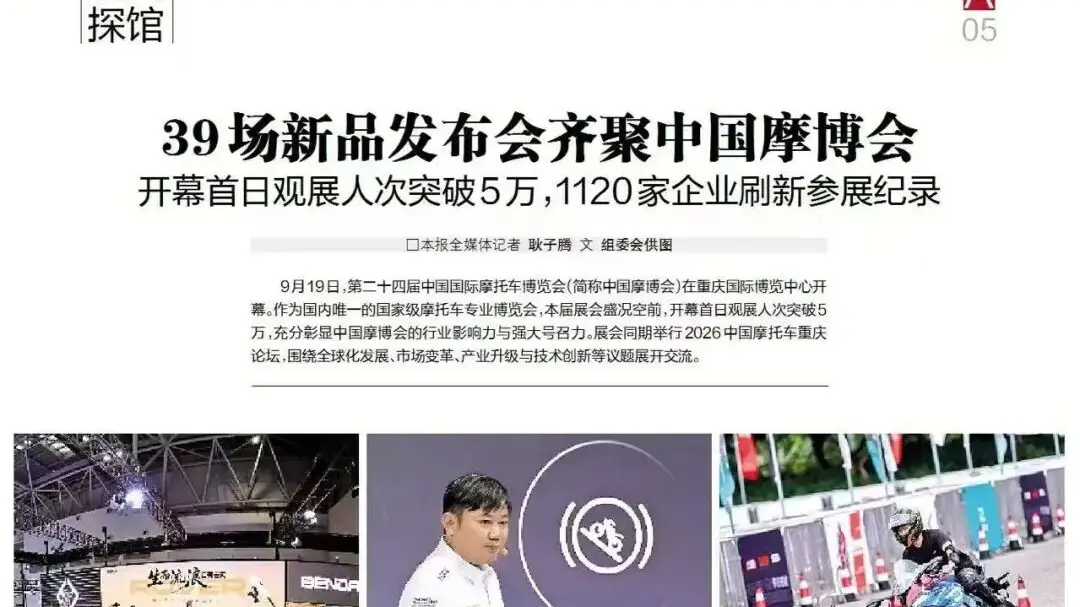
China’s biggest motorcycle show just wrapped its most crowded edition ever. Over four days, 300,000 visitors walked the halls, 1,120 companies exhibited and 3,100 models were on display — a record scale for the event. More than 860 media outlets sent 2,058 reporters, and related topics on Chinese social platforms racked up 70.65 billion views, or roughly 7 billion in the shorthand used by the show’s organizers. On paper, the numbers describe an industry in full bloom.
The show’s scale reflects something real: motorcycles have moved from a cheap commuting tool to a lifestyle purchase in China. Riding clubs, weekend mountain routes and long-distance touring have become a recognizable subculture, especially among younger urban buyers. Makers have responded with bigger engines, better brakes and styling aimed at enthusiasts rather than delivery riders. The show floor, once dominated by utilitarian commuters, now leans toward sport bikes, adventure tourers and retro-styled models.
Yet the same industry veterans who celebrated the crowds also asked what comes next. Attention and capital are not the same as capability. Chinese brands still struggle to command premium prices at home and abroad, and their names rarely carry the emotional weight of established European, Japanese or American marques. A show can generate traffic; it cannot manufacture heritage. That gap shows up in resale values, in racing results and in how confidently a brand can ask customers to pay flagship money.
The event also exposed how much of the boom depends on a handful of cities and a young, trend-driven audience. Motorcycle culture in China is growing fast but remains thin compared with markets where generations have grown up around bikes. Dealerships, insurance, rider training, touring services and aftermarket parts are still uneven. Enthusiasts complain about registration rules, urban riding restrictions and limited parking, all of which shape whether a first-time buyer ever becomes a lifelong rider.
On the manufacturing side, the progress is genuine. Chinese factories now build mid-displacement engines, electronic rider aids and connected dashboards that would have seemed out of reach a decade ago. Export volumes have climbed, particularly in Southeast Asia, Latin America and Africa, where value-for-money positioning works well. The question is whether that momentum can translate into brand equity rather than just unit sales — the difference between selling bikes and building a following.
Electric motorcycles add another layer of uncertainty. Startups and established makers alike are experimenting with battery swaps, fast charging and software features, but charging infrastructure, battery cost and safety standards remain unsettled. For now, electric two-wheelers dominate short city trips, while gasoline machines still own the touring and performance segments that generate the most passion — and the most media coverage.
The organizers can rightly call this the richest show the industry has ever staged. The harder test comes after the lights go down: whether Chinese motorcycle companies can turn record foot traffic into durable brands, stronger dealer networks and products that enthusiasts recommend without qualifiers. The crowd has arrived. The culture and the engineering reputation are still catching up.