Inside the Hangzhou Center That Builds Robot Training Data by the Million Hours
Training a robot to fold laundry or stack shelves takes an enormous amount of video and motion data — the kind of multimodal interaction footage that teaches a model how objects behave when a machine touches them. The industry consensus is that a usable embodied AI model needs tens of millions of hours of it. What actually exists, after two years of effort across the whole sector, is roughly a million hours, and once the low-quality clips are stripped out, far less is genuinely usable.
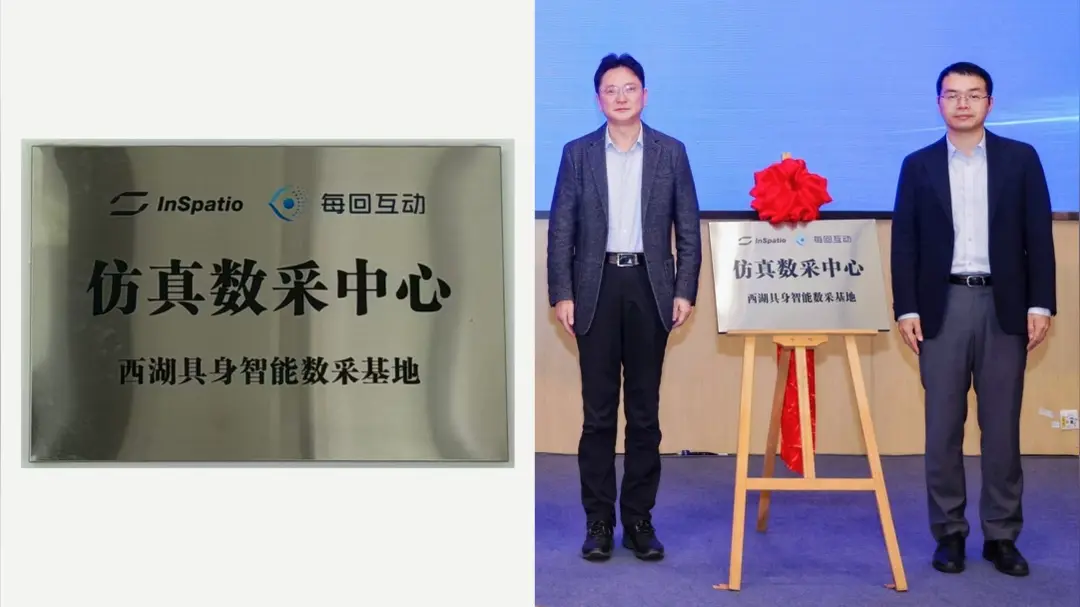
That gap is the business case behind a new facility in Hangzhou, described as the country’s first embodied simulation data-collection center, run by a company called Yingsu. Its argument is that the bottleneck was never really about data as such. It was about the method: the old formula was people multiplied by hours, with human operators guiding robot arms or wearing motion-capture rigs to generate each usable minute.
The new formula, as the company frames it, is environment configurations multiplied by parallel computing power. Instead of filming one robot doing one task in one room, the center builds simulated environments and runs many of them at once, generating varied scenes, lighting, object placements and physics interactions in parallel. One report on the sector describes a related approach capable of producing three million sandboxes a day. The unit of capacity shifts from the operator’s shift to the GPU cluster’s throughput.
That shift matters because it changes who can compete. Human-operated collection is cheap to start but scales linearly and is hard to keep consistent; simulation scales with hardware but demands accurate physics, careful domain randomization and a way to close the gap between synthetic and real footage. Too much simulation and the robot learns clean, cooperative physics that no kitchen or warehouse provides. The center’s stated aim is to break that core bottleneck rather than simply add another pile of hours.
The timing reflects a broader mood in Chinese embodied AI, where humanoid robot makers have drawn heavy investment and intense public attention. Hardware has advanced faster than the software that makes it useful, and data has become the acknowledged constraint. A facility that treats data production as an industrial process — configurable, parallel, repeatable — is a bet that the winners will be those who can manufacture experience rather than merely record it.
The open question is quality. Synthetic footage is only valuable if a model trained largely inside a simulator still works when a physical robot rolls into an unfamiliar room. That is the same sim-to-real problem robotics researchers have chased for years, and scale alone has not solved it. The center’s real test will be whether the data it pumps out produces robots that behave reliably outside the lab.
For global readers, this is less about a single facility than about a direction of travel: Chinese embodied AI firms are trying to compress a decade of data collection into months by treating it as a computing problem. If the approach works, the cost of training a capable robot brain falls sharply, and the next constraint becomes hardware, deployment and safety rather than footage.