Lithography Giants Expand as Chipmakers Book Machines Years Ahead
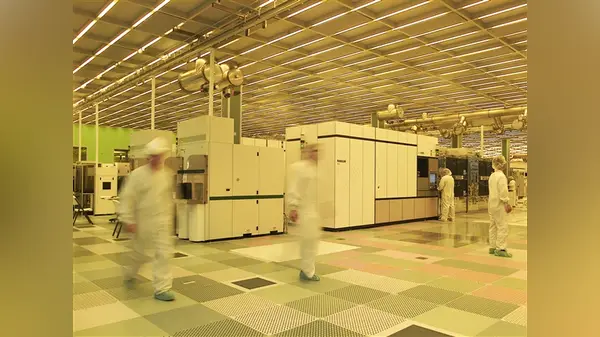
The machinery that prints the world’s most advanced chips is being booked years in advance. ASML, the Dutch company that dominates the market for extreme ultraviolet (EUV) lithography, said in its latest quarterly report that customer reservations for 2027 and 2028 equipment already exceed its current expansion plans. Some core clients, according to the company, have begun asking about supply quotas for 2029 and 2030.
ASML plans to raise capacity for two core product lines — low-numerical-aperture EUV and immersion DUV lithography — by 30 percent each next year, and is exploring whether the 2027 increase can go beyond that. The company has also completed a new round of pricing talks with all major customers, a sign that demand is strong enough to support firmer terms.
The squeeze is not confined to one supplier. Japan’s Canon and Nikon, which make different classes of lithography equipment, are also expanding, and the three companies together account for most of the global market for the machines that define how small a chip’s features can be. When the top suppliers all add capacity at once, it usually means the order books are full rather than that the industry expects a sudden surge in demand.
The boom traces back to AI. Data centers built for training and running large language models need vast quantities of high-bandwidth memory and advanced logic chips, and both require leading-edge lithography. Memory makers and foundries have been racing to secure tools before their rivals do, turning equipment reservations into a strategic asset.
For China, the picture is more complicated. Export controls have limited access to the most advanced EUV machines, pushing domestic firms to develop their own alternatives. Yu Chengdong, a senior Huawei executive, has previously said that domestically made EUV equipment is a realistic goal, though he gave no timeline. China’s chip industry has made progress in mature-node production, but the gap at the leading edge remains wide.
The equipment expansion also has a long tail. A lithography machine is not a single product but a system of lenses, light sources, precision stages and software, and each supplier depends on a chain of specialized component makers. Raising output by 30 percent in a year means those suppliers must also scale, which is not always possible on the same schedule.
For global chipmakers, the message is that the most advanced manufacturing capacity will remain tight for years. Companies that locked in orders early will have an advantage; those that did not may find themselves waiting. ASML’s willingness to discuss 2029 and 2030 quotas suggests the company expects demand to stay strong well beyond the current investment cycle.
The next signal to watch is whether ASML’s 2027 capacity increase moves above 30 percent, and whether Canon and Nikon follow with their own targets. If all three raise their sights at once, it will confirm that the AI-driven chip buildout has more room to run than the current order books already show.