Tencent Shares Sink Below HK$400 as Market Rethinks Its Value
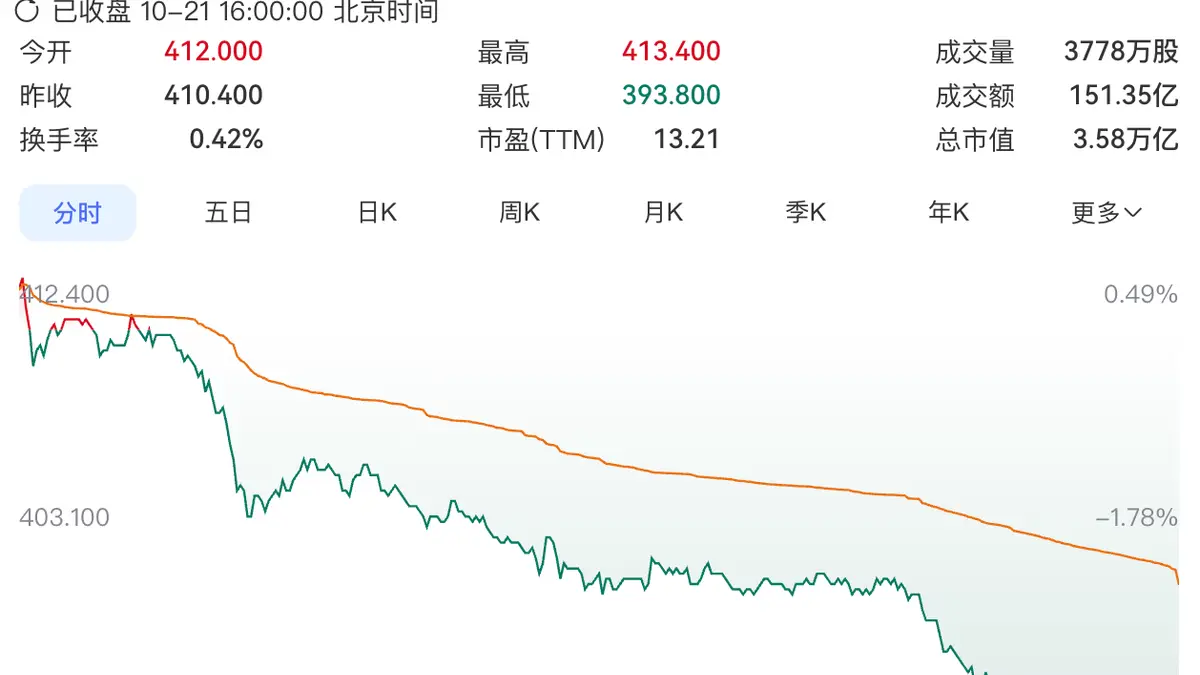
Tencent Holdings shares slipped below the HK$400 mark on October 21, closing at HK$393.8, a level not seen in nearly a year. The 4.04 percent drop extended a painful run for one of China’s most widely held internet companies. At the start of 2026, the stock traded near HK$633.7, valuing the company at about HK$5.76 trillion. Its market value now stands at roughly HK$3.58 trillion, a decline of almost 40 percent this year.
The immediate backdrop is a weak Hong Kong market. Liquidity in the city’s stock exchange has been thin, and technology shares across the board have lost favor as investors rotate toward safer assets. Tencent, as the biggest name in the Hang Seng Index, tends to feel those shifts first. When money leaves the market, it often leaves through the most liquid door.
Analysts have also trimmed expectations for the company’s near-term earnings. Haitong International forecast that Tencent’s adjusted operating profit for the third quarter will fall 5 percent year on year. That projection, reported by Jiemian News, added to the cautious mood. A single brokerage estimate is not a verdict, but it feeds the broader question investors are asking: has the market’s framework for valuing Tencent changed?
For years, Tencent was priced as a high-growth platform. Its gaming titles, WeChat ecosystem, advertising network and fintech services all expanded quickly, and investors paid for that momentum. Now the business is larger and more mature. Growth in gaming and advertising has slowed, regulation has made parts of the business more predictable but less explosive, and the company’s investment portfolio has become harder to value in a weaker market.
That does not mean Tencent is in trouble. It remains one of the most profitable internet companies in the world, with a dominant social platform and a deep bench of games. Its move to open up Yuanbao search, a feature announced this week, shows it is still pushing into new areas such as AI-powered services. But mature companies are valued differently. Investors increasingly look at cash flow, buybacks and dividends rather than raw revenue growth.
The stock’s slide also reflects a wider mood. Chinese technology shares have struggled through 2026 as global investors weigh slower domestic consumption and a cautious outlook for advertising spending. Tencent is not alone, but its size makes it the clearest signal of how the market feels about the sector.
For global readers, the lesson is simple. Tencent is no longer the untouchable growth story it once was. It is a cash-generating giant navigating a slower phase, and its share price is adjusting to that reality. Whether the current level marks a floor or another step down will depend on third-quarter results and whether Hong Kong’s market liquidity improves.
What happens next matters beyond one company. Tencent’s valuation is a bellwether for how the world prices China’s internet economy. A recovery in its shares would signal returning confidence; a further decline would suggest the reassessment has further to run.