Why a Famous Hangzhou Dish Became China's Most Mocked Specialty
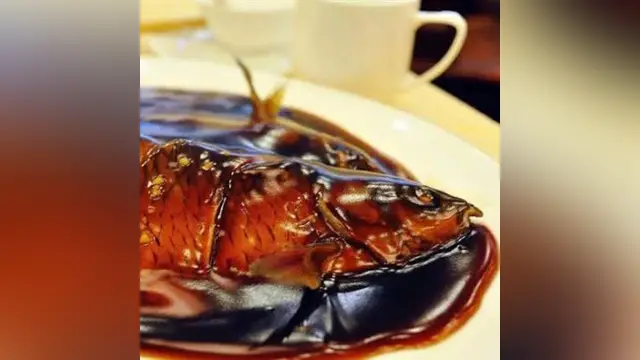
West Lake vinegar fish, or xihu cuyu, has sat near the top of Hangzhou’s menu for generations. The dish is a whole freshwater fish, usually grass carp, poached gently and then dressed in a glossy, dark-red sauce that balances sweet and sour with a sharp vinegar edge. It is the kind of plate a city puts on its tourism posters. Yet on Chinese social media, the same dish has become shorthand for disappointment, a name people invoke to describe a famous thing that tastes bad.
A widely read answer on Zhihu, a Chinese question-and-answer platform, traced the gap between reputation and reality. The writer recalled a first taste at a restaurant near Beishan Road, one of the streets that hugs West Lake. The fish arrived lying flat in a pool of thick brown sauce. The flesh fell apart under a chopstick, and the flavour went sweet, then sour, then a muddy pond note. The reaction, the writer admitted, matched the online consensus: is this it?
The essay’s argument is not that cooks have grown lazy. It is that the dish was praised into fame under conditions that cannot be reproduced at scale. The classic version depended on particular fish, particular water and a level of handwork that a busy restaurant serving hundreds of tourists a day cannot sustain. Fame stayed; the conditions left. Diners now order a legend and receive an approximation.
The ingredient itself is part of the problem. Grass carp is a hardy, fast-growing freshwater fish, but it carries the earthy, muddy flavour that the writer noticed. In a home kitchen, cooks purge the fish in clean water for days before cooking. In a commercial kitchen turning tables, that step is easy to skip, and the sauce has to work harder to cover the result. Vinegar can hide many faults, but not all of them.
Hangzhou is not short of famous food, and that raises the stakes. The city is one of China’s most prosperous tourist destinations, and its cuisine carries a long, self-conscious heritage. When a signature dish underperforms, visitors do not blame one kitchen. They blame the whole idea of the dish, and the complaint travels faster than any correction. The essay notes that many defenders of the fish have never eaten a careful version, while many critics have eaten only careless ones.
The story fits a broader pattern in Chinese food culture, where reputation and execution often drift apart. A dish becomes a symbol, the symbol becomes a compulsory order for visitors, and the compulsory order rewards volume over craft. Something similar has been argued about other regional classics, from banquet dishes simplified for tour groups to snacks stretched across chains. The difference with vinegar fish is that the gap is now a joke people share before they even arrive.
For travellers, the practical lesson is not to skip the dish but to choose carefully. Smaller kitchens, seasonal fish and a willingness to ask how the fish was prepared can still produce the version the reputation was built on. The essay’s closing point is blunter: a famous dish is a promise, and promises are kept in the kitchen, not on the poster. Until more kitchens keep it, the mockery will keep spreading.