Six Roosters Station: Why a Tiny Guizhou Stop Attracts Tourists
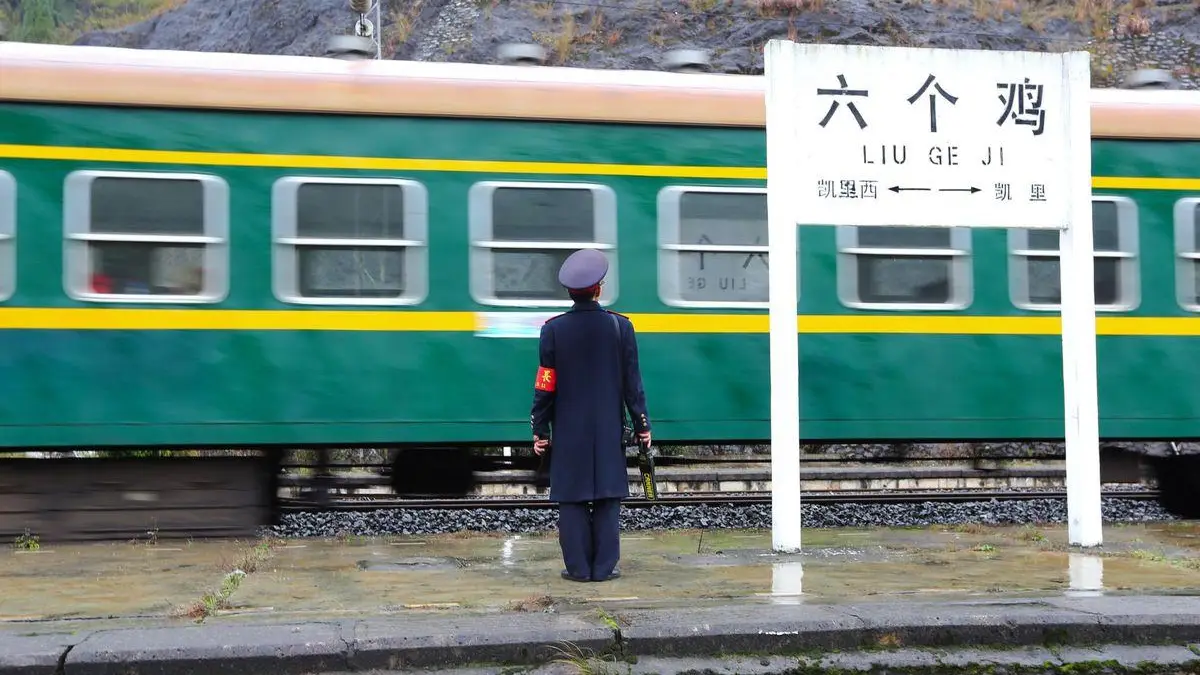
Deep in the mountains of southeast Guizhou, on a line that threads through Qiandongnan Miao and Dong Autonomous Prefecture, sits a railway halt so small that few timetables bother to highlight it. Its name, however, does the opposite of disappearing. It is called Six Roosters Station — six ji in Chinese — and for years it has drawn curious travelers who come less for the scenery than for a photograph beside the sign.
The station opened in 1974, when railway builders pushed a steel line into the hills around Lushan town in Kaili city. At the time it was a modest stop of low rank, serving a village that maps had largely ignored. But putting a place on the railway map also put it on the map of memory, and the name stuck. In a system where station names usually follow counties, towns, villages or rivers, and where clarity for dispatchers and conductors matters above all, Six Roosters is an oddity that was never smoothed away.
That is partly what makes it interesting. Railway names are practical tools: they appear on timetables, freight receipts and operating records, and they need to be short and easy to read aloud. Six Roosters fits the second rule better than the first. It is memorable, slightly comic, and impossible to confuse with any other stop. Travelers who stumble across it online often assume it is a joke. It is not. The sign is real, the platform is real, and the trains still pass through.
For the surrounding village, the attention has been a quiet gift. Tourism in China’s mountain southwest usually means terraced rice fields, drum towers and the embroidery of the Miao and Dong communities. Six Roosters offers something smaller and stranger: a piece of everyday infrastructure that became a story. Visitors arrive by road or on slow trains, take their pictures, walk a little, and leave. The village itself remains rural and unhurried, with none of the staged attractions of a larger scenic area.
There is a broader appeal here for anyone who travels off the main routes. China’s high-speed rail network has made long-distance travel fast and predictable, but the older, slower lines still carry the texture of the places they cross. A station name like Six Roosters is a reminder that the railway is not only a machine for moving people but also an archive of local speech and local history, written into the landscape one sign at a time.
For foreign visitors, the lesson is simple. Some of the best travel discoveries in China are not on any bucket list. They are small, specific and slightly absurd, and they reward the traveler who is willing to take a slow train and look out of the window. Six Roosters Station will never compete with the great sights of Guizhou. It does not try to. It simply sits in the mountains, keeps its name, and waits for the next curious passenger to step onto the platform and smile.
If you go, go gently. This is a working station in a rural community, not a theme park. Buy a ticket, mind the platform, and enjoy one of the more charming footnotes in the history of Chinese railways.