Why Horses Sleep Standing Up, and Other Animal Secrets
In the United States, a horse owner once nailed a sign to his fence reading, in capital letters, THIS HORSE IS NOT DEAD. Passers-by kept phoning the emergency number. They would see a horse lying flat on the grass, four legs stretched out stiffly, and assume the worst. In Cambridge, New Zealand, a white horse named Slim Shady napped so peacefully that locals complained to the town council several times, until a television crew came out to film a news segment proving the animal was alive.
Why do horses spend so much time asleep on their feet, and why do they sometimes lie down? The answer is a neat piece of evolutionary engineering, and it has been circulating widely among Chinese readers this week through a popular explainer originally published on Zhihu, a question-and-answer platform often described as China’s version of Quora.
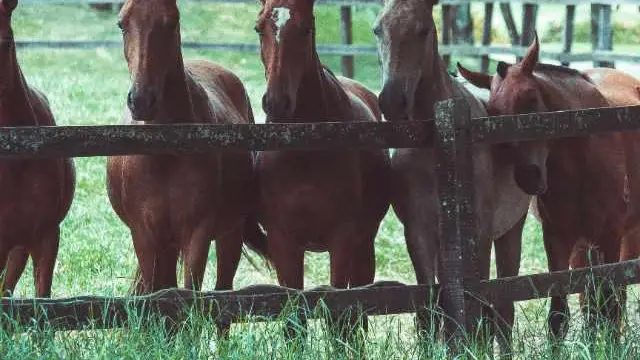
The short version is that a standing horse is a ready horse. Horses are prey animals. In the wild, a horse that has to scramble to its feet before fleeing loses precious seconds. So evolution favored bodies that can lock into a light doze while still able to bolt. The secret lies in a remarkable piece of anatomy called the stay apparatus, a system of tendons, ligaments and joints in the legs that lets a horse rest its weight with almost no muscular effort. A horse can effectively switch off its leg muscles and stand on its skeleton, like a bicycle propped on a kickstand.
That does not mean horses never lie down. They do, and they must. Deep sleep, the kind that restores the body and consolidates memory, requires lying flat, usually on one side, for short stretches. Adult horses typically need only a couple of hours of lying-down sleep in any twenty-four-hour period, often broken into brief naps. Foals sleep far more, flopping down frequently while their bodies grow. If a horse never lies down at all, that is a warning sign of pain, stress or an unsuitable stable, not toughness.
The essay is one of a cluster of similar pieces now popular with Chinese readers, covering topics such as why a glass of water seems to quench thirst before it reaches the stomach, and how the body’s internal accounting system decides that you have had enough. Another recent favorite asks what life on Earth might look like in the far future, billions of years from now, when the sun swells and brightens. Together they represent a small but lively corner of Chinese online culture: curiosity-driven, carefully researched explainer writing that treats ordinary questions as worth serious answers.
For anyone who has watched a horse stand motionless in a field and wondered whether it was awake, the practical takeaway is reassuring. A standing horse with a lowered head, relaxed ears and a softly switching tail is almost certainly napping, not suffering. A horse flat on its side with legs rigid may also simply be in deep sleep, which is exactly the misunderstanding that prompted that fence sign in the first place.
What makes the story travel is not just the biology but the human behavior around it. Concerned strangers, alert town councils and a news crew dispatched to check on a sleeping horse all point to the same instinct: people notice animals, and they worry. The horse, meanwhile, has no idea it has become a minor celebrity. It simply does what horses have done for millions of years, resting one leg, closing its eyes, and staying ready to run.