Alibaba's Qoder AI Team Bets on the Agent Era
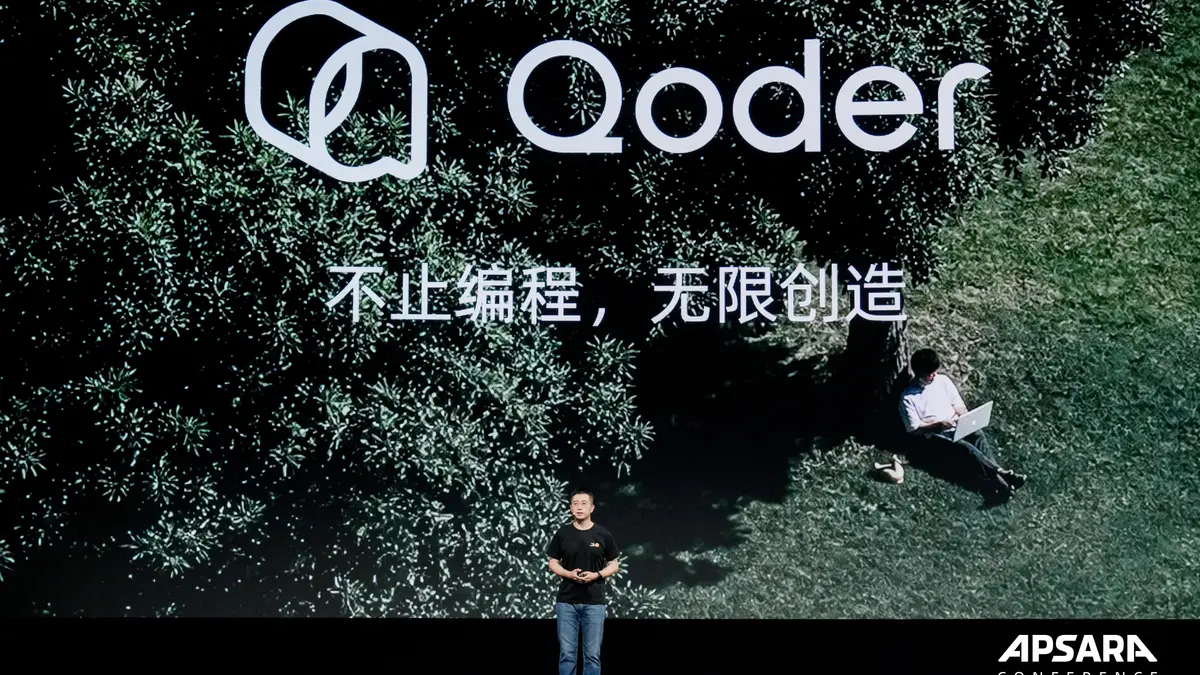
At Alibaba, a team of engineers has been quietly building something that changes how they work. Called Qoder, it is an AI coding assistant designed to write, review and explain software — and the team behind it is unusual: an AI-native unit that uses the very tools it builds. The idea, reported by Chinese tech outlet TMTPost, is that when AI starts to change how software is made, the team making the tools should be the first to reorganize itself around them.
The name Qoder may be unfamiliar outside China, but the concept is not. AI coding assistants have become one of the most competitive battlegrounds in global tech, with companies racing to build tools that can complete whole chunks of programming work. Alibaba is not alone in this: it is competing with startups and giants alike. What makes its approach notable is the internal structure — a small, focused group empowered to act like a startup rather than a division inside a sprawling company.
That structure reflects a wider shift in China’s technology industry. For years, big platforms grew by adding people, products and business lines. Now the focus is on leaner teams that can move quickly and use AI to multiply their own output. The question the Qoder team is asking — how should a company organize itself when AI can do part of the work? — is one that many firms, in China and abroad, are only beginning to confront.
The timing is telling. Interest in personal AI agents and enterprise AI agents is rising fast, and analysts describe two distinct paths: agents that become a hub for an individual’s digital life, and agents that slot into a company’s business processes. Coding tools sit at the intersection, because software is both a product and the machinery that runs everything else.
Alibaba’s move also fits a broader pattern in China’s tech sector, where companies are pouring resources into AI models, chips and applications at once. The competition is not just about who has the biggest model, but who can turn it into something people actually use every day. A tool that helps developers write better code is a practical place to start, because the users are demanding and the results are measurable.
For global readers, the story matters beyond one company. China’s tech giants are experimenting with new ways of working that could influence how software teams everywhere are organized. If a small AI-native team can ship competitive products, it challenges the assumption that scale alone wins. That idea is already spreading through boardrooms and engineering departments far from Hangzhou.
What happens next depends on execution. AI coding tools still make mistakes, and trust is earned slowly. But the direction seems clear: the companies that learn to blend human judgment with machine speed will set the pace. Alibaba’s Qoder is one experiment among many — and a sign that the agent era is already reshaping the teams that build the future.