World's Highest 330kV Power Tower Rises on the Tibetan Plateau
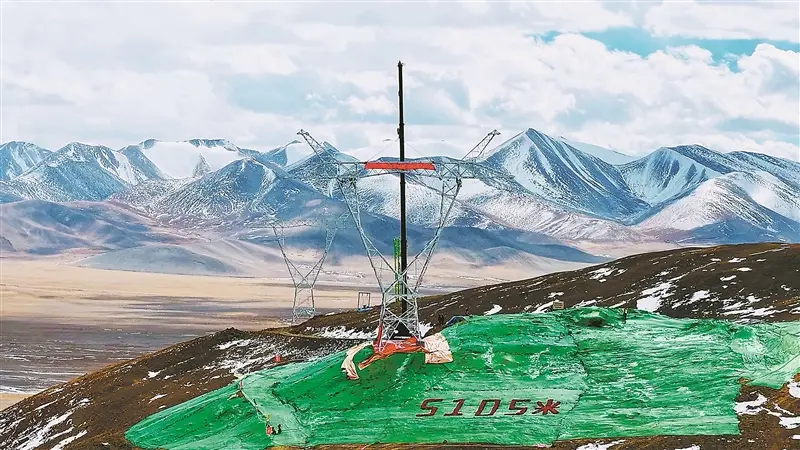
Utility crews have completed what engineers are calling the world’s highest-altitude 330-kilovolt transmission tower, a 30.5-metre steel lattice standing 5,105 metres above sea level in the Tanggula Mountains on the Tibetan Plateau. The structure weighs 17.2 tonnes and was assembled as part of a line designed to bring reliable electricity to highland communities and the infrastructure that runs through them.
The tower, numbered #9088, belongs to the Yanshiping–Tanggula line built by Gansu Power Transmission and Transformation Company, a subsidiary of State Grid. The route threads through a region where oxygen is thin, temperatures plunge for much of the year and construction crews can work only in narrow weather windows. Even so, the project reached its milestone in late October, according to a report from Science and Technology Daily.
Building at such altitude is less about a single feat of engineering than about logistics repeated hundreds of times. Every bolt, cable and steel section must be trucked over mountain roads, then lifted and fitted by workers operating with reduced oxygen and heavier safety constraints. Tower assembly at 5,000 metres typically requires shorter shifts, extra medical monitoring and equipment rated for cold and wind.
Why does a single tower matter? Because transmission capacity is the bottleneck for everything else in a remote region. Once a line crosses a high pass, it can carry power to towns, railway signal systems and communications equipment that would otherwise depend on diesel generators or unreliable local supply. In the Tanggula area, the railway itself is a major user of stable electricity.
The record is part of a broader push to push grids into China’s least hospitable terrain. The same company has worked on similar high-altitude lines across the plateau, where the challenge is not only elevation but permafrost, avalanche risk and thin air that reduces the efficiency of insulation and equipment. Each completed tower becomes a reference point for future routes.
For global readers, the story is a reminder that the energy transition is not only a matter of solar panels and batteries; it is also about steel, concrete and the willingness to build in places where construction is slow, expensive and sometimes dangerous. China now operates the world’s largest high-voltage transmission network, and its engineers increasingly treat extreme geography as a design problem rather than a barrier.
The next signal to watch is commissioning. Erecting a tower is a visible milestone, but a line only counts once it is energised and carrying current. If the Yanshiping–Tanggula link comes online on schedule, it will extend dependable power deeper into the plateau and give engineers a tested template for the next record-setting span.