Why China's Childhood 'Butt Shot' Faded From the Clinic
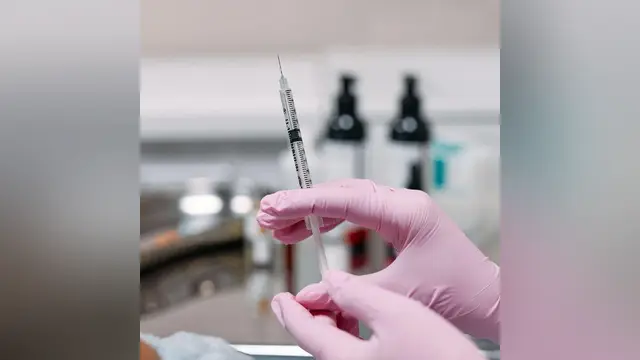
For anyone who grew up in a Chinese county town in the 1980s or 1990s, the phrase “butt shot” summons a specific memory: a cold swab, a sharp pinch, and a nurse telling you to relax your leg. Whether you had a fever, an infection or an allergy, the visit to the clinic often ended the same way, with a dose of penicillin delivered deep into the gluteal muscle.
The question of why that ritual has all but vanished is the subject of a widely read explainer circulating on Zhihu, the Chinese question-and-answer platform known for long-form answers on everyday science. Its author, writing under the handle Zhanyun, argues the answer is less about medicine turning against the practice than about the country’s medical system outgrowing it.
In the 1980s and 1990s, the answer goes, most county and township clinics had limited equipment and a narrow medicine cabinet. Penicillin was cheap, widely available and effective against a broad range of bacterial infections, so it became the default. But penicillin is also irritating to tissue, which shaped how it had to be given.
To work fast, the dose cannot be too small. To stay safe, it cannot be too large, and it must not be absorbed too quickly. Those constraints pushed clinicians toward intramuscular injection, which releases the drug gradually. The explainer lays out the four common injection routes — intradermal, subcutaneous, intramuscular and intravenous — and notes that intradermal shots are typically tiny, around 0.1 millilitres, and mostly used for allergy tests.
The deeper shift is structural. As county hospitals acquired better diagnostic tools and a wider range of oral antibiotics, the needle stopped being the fastest route to relief. Oral medication became cheaper, safer and easier to manage at home. Newer formulations of penicillin and its relatives also reduced the irritation that once made deep-muscle delivery attractive.
The Zhihu answer is part of a broader genre on the platform: explainers that take a half-remembered detail of daily life and unpack the science and history behind it. Recent popular threads have asked why certain logos look alike, or which actors turned up in unexpected roles. The appeal is partly nostalgia, partly the pleasure of having a vague childhood memory explained with clinical precision.
For global readers, the story is a small window into how quickly Chinese primary care changed. A generation of adults can still describe the clinic routine in detail, while children born in the last fifteen years may never experience it. The shift happened without a single dramatic announcement, driven by drug development, hospital investment and changing prescribing habits.
The explainer does not claim the intramuscular shot has disappeared entirely. It remains useful in specific cases, and vaccination programmes still rely on needles. But as a default response to a feverish child, the butt shot has become a relic, remembered mostly in jokes and online threads. Its disappearance says less about nostalgia than about how ordinary medical care in China quietly modernised.