Why China's Zhihu Readers Are Debating a 'Corpse-Skin' Beauty Injection
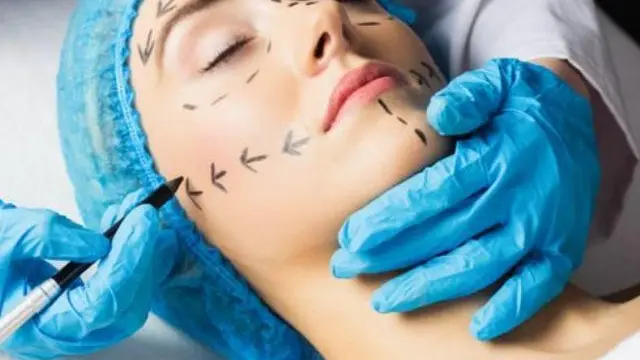
A product marketed in China as a premium anti-aging injection has set off an unusually heated argument about where cosmetic medicine should draw its line. The treatment, known on Chinese social platforms as the “corpse-skin injection,” is a human-derived injectable made from donated skin tissue. According to a widely read explainer on the question-and-answer platform Zhihu, the product is Re2O, made by a South Korean company called L&C Bio, and is described as a human acellular dermal matrix injection.
The mechanics are what give the treatment its nickname. Donated human skin is processed to strip out the cells that would trigger immune rejection, leaving behind a scaffold of collagen and other structural proteins. Injected into the face, that scaffold is meant to support the surrounding tissue and, in principle, encourage the body’s own cells to move in and rebuild. The material is not new to medicine. Similar dermal matrices have long been used in wound care and reconstructive surgery, where they can help close difficult burns and repair damaged tissue.
That medical pedigree is exactly what troubles the critics. The Zhihu writer frames the dispute as a question of resource allocation: is it appropriate to take a material developed to help save or repair tissue and redirect it toward cosmetic volume and wrinkle reduction? The article notes that the product is sold in Chinese clinics at more than 2,000 yuan per injection, promoted by social media accounts with hundreds of thousands of followers and backed by domestic capital. For critics, that combination of scarce biological material and a luxury price tag is the heart of the complaint.
The explainer is careful not to reduce the story to horror. It walks readers through what the product actually is, where the raw material comes from and why the sourcing matters, treating the “corpse” framing as a marketing accident as much as a genuine ethical flashpoint. Donated tissue carries its own regulatory and consent questions in every country that permits it, and those questions become sharper when the end use is vanity rather than repair.
The debate also exposes how quickly a niche medical product can become a consumer trend in China. Aesthetic clinics compete for attention on short-video and lifestyle platforms, where novel ingredients are packaged as breakthroughs long before regulators or clinicians have settled on clear guidance. Followers with large audiences can turn a single clinic’s menu item into a national talking point within days, and the vocabulary of the promotion, rather than the science, often drives the conversation.
For global readers, the most useful frame is comparison. Human-derived injectables sit in a crowded category that also includes hyaluronic acid fillers, collagen stimulators and platelet-rich plasma treatments, each with its own evidence base and its own marketing excesses. The question of whether a given material is medically justified for cosmetic use is not unique to China, but the speed at which it travels from clinic to feed is.
What happens next will hinge on scrutiny rather than slogans. Chinese aesthetic regulators have been tightening oversight of injectable products, and the debate over Re2O may push clinics to disclose sourcing and indications more openly. Until then, the safest reading of the controversy is the one the explainer itself suggests: understand what is in the syringe before deciding whether the price, or the premise, makes sense.