Why Chinese Bottled Water Has a Three-Day Rule
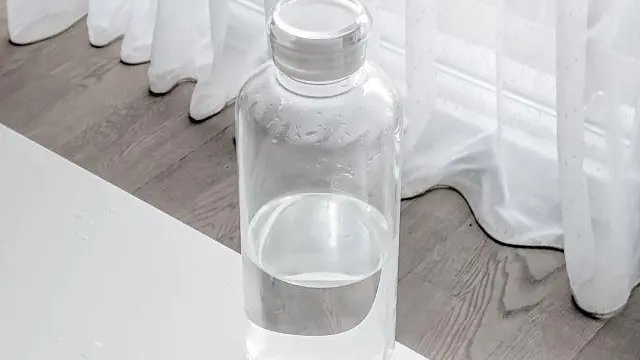
Most people treat bottled water as sterile and eternal. A widely shared explainer on Zhihu, China’s Quora-style question-and-answer platform, suggests otherwise — and the reasoning is simple enough that it is worth knowing wherever you live.
The writer, who describes himself as a “technical foodie,” sums up experiments on opened bottled water. If you drink straight from the bottle, put the cap back on and leave it at room temperature, microbial levels approach the spoilage threshold — roughly one million colony-forming units per millilitre — within about three days. If you never touch the bottle with your mouth and only pour water out, growth is much slower: after seven days, microbes have increased noticeably but still stay below that threshold.
The difference comes down to backwash. Every sip from the bottle sends a small amount of saliva, and the bacteria it carries, back into the water. That is why the same water, handled differently, ages at completely different speeds. The practical advice is straightforward: if you have drunk directly from a bottle, treat it like fresh food rather than shelf-stable goods, and finish it within a few days. Bottled drinks of all kinds, including mineral water, are best not stored for long after opening.
It is worth being precise about what this does and does not mean. This is not a claim that bottled water is dangerous, and it is not an official Chinese standard. The spoilage limit cited is a general food-safety benchmark, and the writer is careful to note that his conclusions come from experiments rather than a formal regulatory study. Healthy adults are unlikely to notice anything at all. Still, the logic explains why hospitals, kindergartens and cautious households often label open bottles or simply pour water into cups.
The story resonates in China partly because bottled water is so ordinary. It is sold in every convenience store, carried to offices, gyms and classrooms, and stacked by the case in homes. Summer heat makes the question sharper, since warm conditions speed bacterial growth. Many readers said they had never thought about the bottle sitting on their desk for a week.
The explainer fits a broader habit on Chinese platforms: taking a mundane object and asking what actually happens to it. Similar posts have covered why leftover rice should be refrigerated quickly, how long cooked food can safely sit out, and why cutting boards need replacing. The tone is practical rather than alarmist, aimed at busy people who want a rule of thumb rather than a lecture.
For international readers, the takeaway travels well. Sealed bottled water is effectively sterile; opened bottled water is a perishable product that reflects how you drink it. If you sip from the bottle, the clock starts. If you pour into a glass, you buy yourself more time. Either way, keeping opened bottles out of direct sun and heat helps, and if water smells or tastes off, throwing it away costs very little.