China's Bus Makers Find a Sudden Boom in Algeria
In August 2025, a serious coach accident in El Harrach, on the eastern edge of Algiers, killed and injured passengers and prompted Algeria’s president, Abdelmadjid Tebboune, to order the immediate import of 10,000 new buses to replace the country’s ageing fleet. The decision turned an ordinary procurement into one of the largest single bus orders in the world, and Chinese manufacturers moved quickly to fill it.
By 8 January 2026, 3,000 Higer buses had assembled at the company’s plant in Suzhou, in eastern China’s Jiangsu province, ready for shipment to Algeria. Chinese industry coverage described it as the largest single export order in the history of the country’s bus industry. The following month, 650 Yutong coaches were loaded onto ships. Algerian media tracked the arrivals closely as the first batches entered service.
The scale of the order is unusual. Bus exports are typically small, country-by-country deals, and a single contract for thousands of vehicles is rare enough to reshape a manufacturer’s year. For Higer and Yutong, two of China’s best-known coach brands, Algeria has become a showcase market almost overnight, and a test of whether they can deliver on time and keep vehicles running in a hot, dusty climate far from home.
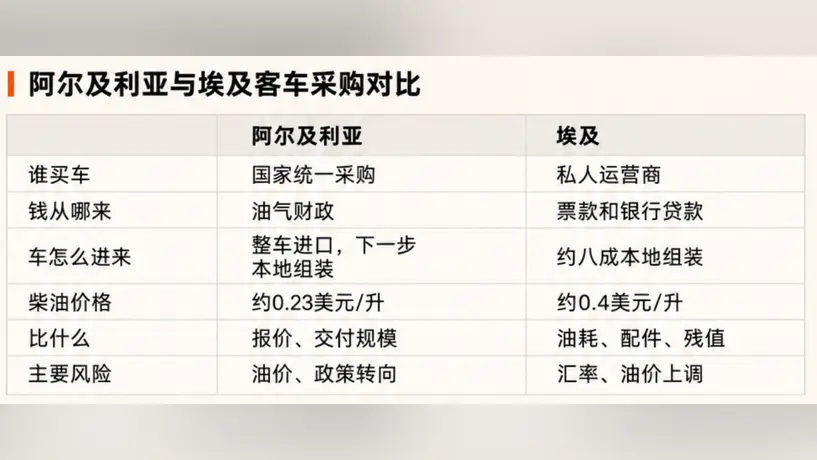
Yet the same opportunity is not equally profitable for everyone. Reports on the Algerian deal note that even when selling into the same African market, profit margins between competitors can differ several-fold, depending on the model mix, the level of local assembly and after-sales support, and how much of the price is financed by export credit. A big headline order does not automatically translate into a big headline profit.
The broader context is that Chinese commercial vehicle makers are looking abroad for growth as domestic demand softens. Passenger car exports attract most of the attention, but buses and coaches have quietly become a strong export category, particularly in Africa, Latin America and Southeast Asia, where fleets are old and public transport is being rebuilt. Algeria’s emergency purchase is an extreme example of a trend that has been building for several years.
Algeria’s motivation is safety and speed. Replacing a national fleet after a fatal crash is a politically urgent task, and Chinese suppliers offered large volumes, short delivery times and competitive prices. The country has also been trying to build domestic assembly capacity, which may shape how much of the next round of orders is imported whole and how much is assembled locally.
For global readers, the Algerian bus deal is a reminder that China’s vehicle export story is broader than electric cars. Coaches and city buses are lower-profile but highly visible in daily life, and they carry Chinese brands into markets where the next purchase decision will be made by transport ministries and city operators rather than individual consumers. Winning the first order is only the start; service networks and spare parts will decide whether the relationship lasts.
The signal to watch is delivery pace. If the 3,000 Higer buses and the 650 Yutong coaches reach Algerian roads on schedule, and if follow-on orders appear, Chinese bus makers will have turned an emergency purchase into a durable market position. If delays or quality complaints emerge, the window may close as quickly as it opened.