China's September Auto Market Splits: Big Carmakers Pull Ahead
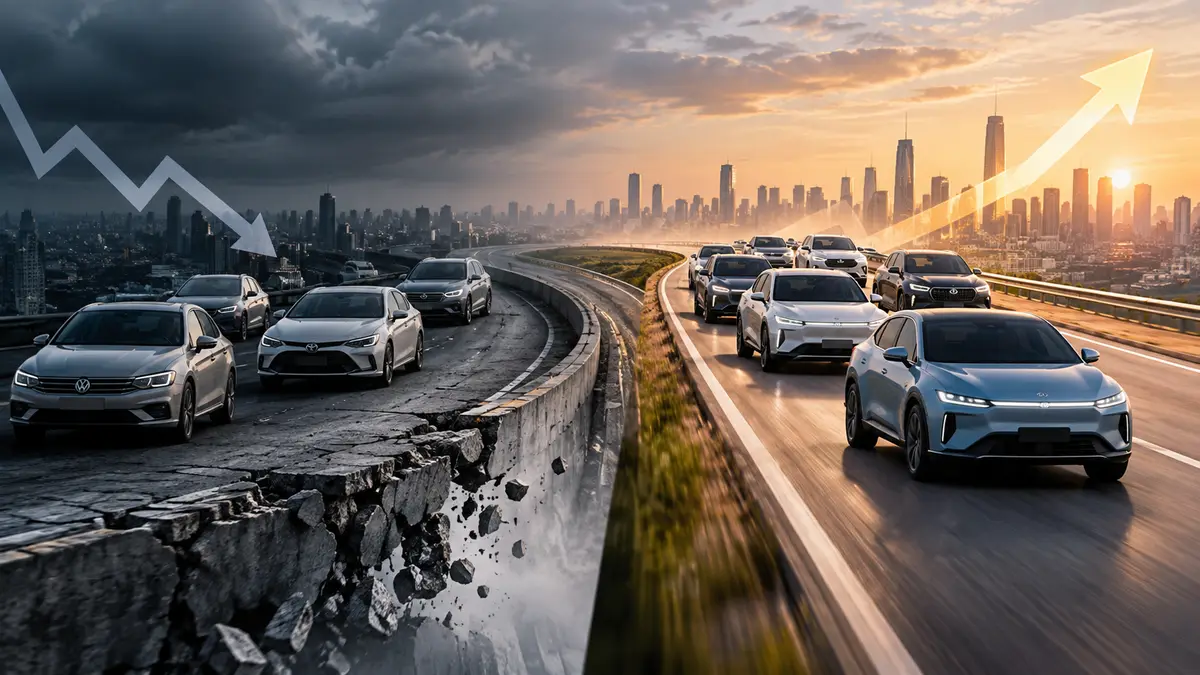
China’s car market did not stage a full recovery in September. Instead, the month delivered a sharp split: the overall market stayed under pressure while a handful of leading automakers kept posting growth. The pattern, reported by the tech and business outlet TMTPost, suggests the world’s largest auto market is moving past its long stretch of easy expansion.
For years, growth came from first-time buyers. Millions of families were entering the middle class and buying their first car, and almost any brand with a decent product could ride that wave. That era is fading. China’s car parc is enormous, cities are crowded, and many households already own a vehicle. When the pool of new buyers stops growing quickly, every sale one company wins is a sale another company loses.
That is why the phrase now circulating in the industry is stock reallocation rather than incremental growth. The pie is not getting much bigger month to month, but it is being cut differently. Brands with strong technology, aggressive pricing and efficient distribution are taking share from weaker rivals, and the gap between winners and laggards is widening.
The leaders’ advantage is not a single product. It is a combination: scale in manufacturing that lowers unit costs, a fast cadence of new models, and software features that buyers now treat as standard. Electric vehicles and plug-in hybrids sit at the center of this fight, because that is where Chinese consumers are actually spending. A carmaker that cannot offer a competitive battery-electric or hybrid option struggles to stay in the conversation.
Price competition remains brutal. Discounts and limited-time offers have become routine, and they squeeze margins across the board. Yet the strongest players can absorb that pressure better than smaller ones, which is precisely how consolidation accelerates. Analysts have long predicted a shakeout in China’s crowded field of automakers, and months like September make that prediction look less like a forecast and more like a slow-motion reality.
The split also matters beyond China’s borders. Chinese automakers are exporting at record levels, and the companies gaining share at home are usually the same ones with the resources to build overseas sales networks, localize production and weather trade friction. A brand that is losing ground domestically rarely has the cash to fund a serious international push.
For global readers, the takeaway is simple. China’s auto market is no longer a rising tide that lifts every ship. It is a mature, intensely competitive arena where a few large players are pulling away and everyone else is fighting for the remaining space. September’s numbers did not show a boom or a bust. They showed a market sorting itself out, and that sorting will shape which Chinese car brands the world sees on its roads in the years ahead.
Investors and industry watchers should expect more of the same in the coming months. Seasonal peaks around holidays can lift sales temporarily, but they do not change the underlying structure. The real story is concentration: fewer winners, higher stakes, and a market where execution matters more than enthusiasm.