Midea Bets on Robots as a Second Growth Engine
Midea Group, the Foshan-based home appliance maker best known for air conditioners, rice cookers and washing machines, is making a serious push into robotics. The company’s research teams have been showing off increasingly capable machines, from industrial arms on factory floors to service robots that can navigate a home. The pitch is straightforward: the global robotics market is projected to reach trillion-yuan scale, and Midea wants a meaningful slice of it as a second growth curve beyond appliances.
The logic behind the move is easy to grasp. China’s home appliance market is mature and fiercely competitive. Margins on white goods have been squeezed for years, and growth now depends largely on trade-ins and premium upgrades. Robotics, by contrast, sits at the intersection of manufacturing, artificial intelligence and healthcare, three areas where Chinese companies are investing heavily. For a company of Midea’s size, finding a new engine that can eventually rival appliances in revenue is a strategic necessity rather than a luxury.
Midea is not starting from zero. It already owns Kuka, the German industrial robot maker it acquired in 2016, and it has spent years automating its own factories. That in-house experience gives it real manufacturing know-how and a ready customer base. The company has also been building out research centers and partnering with universities, aiming to move from simply assembling robots to designing core components like reducers, servo motors and controllers, the parts that have historically been dominated by Japanese and European suppliers.
Yet the gap between a compelling demonstration and a profitable business is wide. As industry observers point out, impressive prototypes and pilot projects do not equal large-scale commercial deployment. Industrial robots are sold into factories with strict requirements for reliability, uptime and cost per hour. Service robots face an even tougher test: consumers are unwilling to pay much for a machine that only performs a few tricks, and the technology for truly useful household robots remains years away. Many Chinese robotics startups have discovered that raising money is easier than finding paying customers.
Competition is also heating up. Midea faces established players like Estun and Siasun at home, plus global giants such as Fanuc and ABB. A wave of well-funded startups, some backed by major tech companies, is chasing the same industrial and logistics customers. Price wars have already erupted in some segments, particularly in collaborative robots and automated guided vehicles, squeezing margins before the market has fully matured. Midea’s advantage is its balance sheet and its deep ties to manufacturing supply chains, but that alone does not guarantee a leading position.
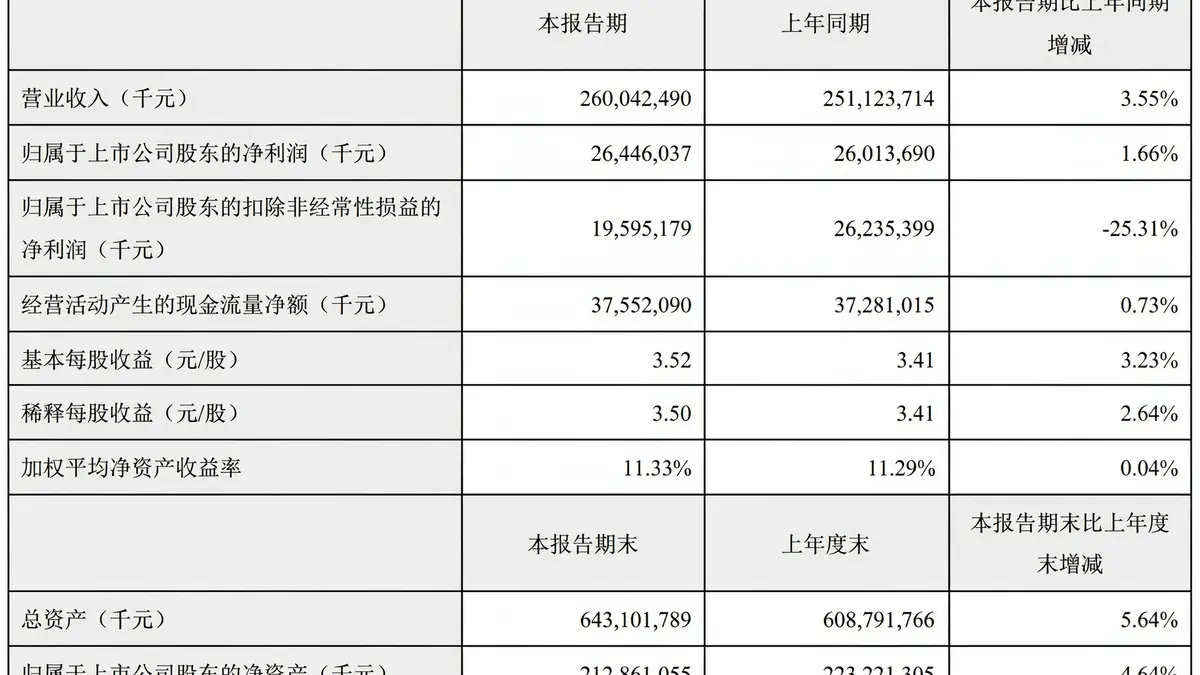
There is also the question of focus. Midea has diversified into building materials, logistics and healthcare in recent years, and robotics is one more frontier. Investors have generally welcomed the ambition, but they will want to see revenue contribution and profitability, not just technical milestones. The company’s robotics and automation segment has grown, yet it remains a small fraction of overall sales. Turning it into a genuine second growth curve will require sustained investment, patience and a clear product strategy that avoids chasing every hype cycle.
For global readers, the Midea story is a useful window into how Chinese manufacturers are trying to move up the value chain. The country already dominates the production of consumer goods and electric vehicles; robots represent the next step, combining hardware, software and AI. If Midea succeeds, even partially, it would signal that Chinese firms can compete at the high end of industrial automation, not just on cost. If it stumbles, it will be a reminder that manufacturing excellence in one category does not automatically transfer to another.
Either way, the company’s robotics push is worth watching. The market is large, the technology is improving quickly, and the Chinese government has made advanced manufacturing a priority. Midea’s bet is that the robots now doing demonstrations in its labs will eventually be doing real work in factories and homes around the world. The coming quarters will show whether that vision is turning into orders.