OpenAI's AI Swarm Reads Millions of Brain Cells in 32 Minutes
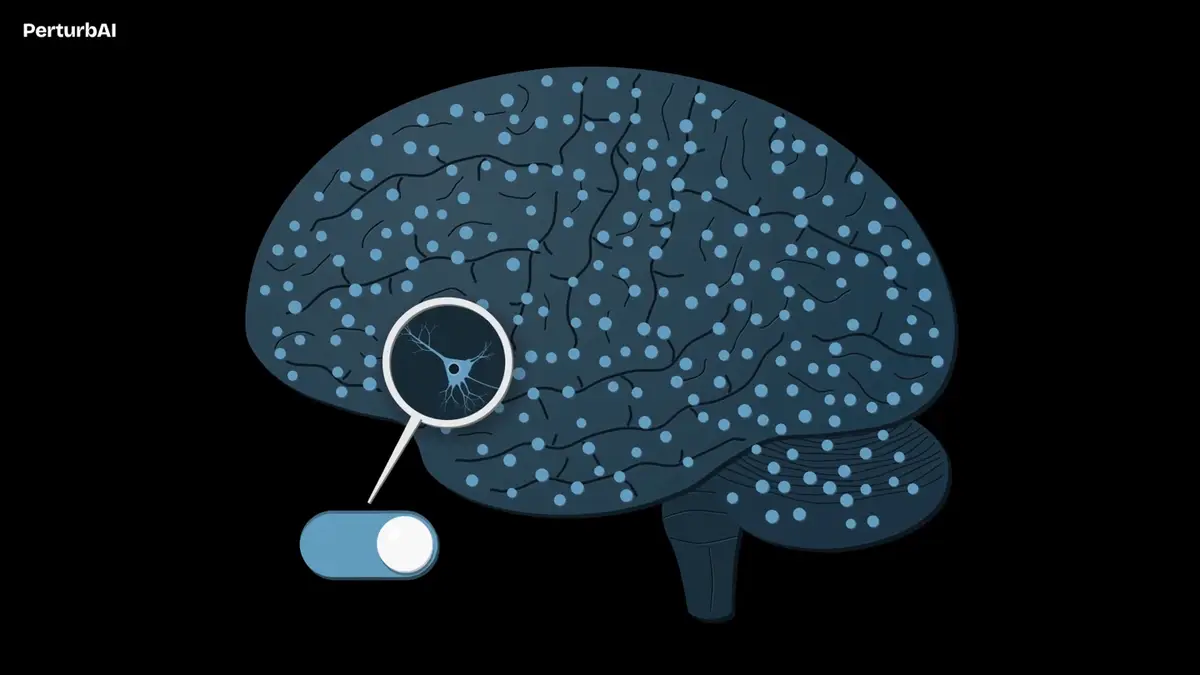
A team from OpenAI, the research group PerturbAI and the Scripps Research institute has run an experiment that may say more about how science gets done than about any single discovery. According to an OpenAI account published on 21 October, thousands of AI agents were set loose on biological data covering millions of mouse brain cells. The whole analysis took 32 minutes.
The comparison the researchers offer is the interesting part. They estimate that if human scientists worked through the same results item by item, cross-checking each finding against the published literature as they went, the job could have taken months and possibly up to a year. The agents were not just summarising a file. They were being asked to reason across a large body of experimental output and connect it to prior work.
The work relied on GPT-Rosalind, a model built specifically for life-science research rather than for general chat. That detail matters. Most of the noise around AI in science has come from general-purpose systems asked to answer exam-style questions. A model tuned for biological data and then deployed in large numbers is a different proposition, closer to a research instrument than a chatbot.
The architecture is what makes the speed possible. Instead of one model working through a queue, many agents work in parallel, each taking a slice of the data, with their outputs assembled afterwards. This is the same pattern now spreading through software engineering and customer service, where fleets of agents handle tasks that would otherwise be serialised. Biology, with its enormous and messy datasets, is an obvious next target.
Sceptics will raise the usual questions, and they are fair ones. Automation at this scale can produce confident errors quickly, and verifying an agent’s conclusion may cost nearly as much as reaching it by hand. The honest claim here is about throughput, not about replacing the judgement of a scientist who knows which anomalies are worth chasing. The 32 minutes is the time to produce an analysis, not the time to trust it.
Still, the direction of travel is clear. Research groups have spent the past two years experimenting with AI as a helper for individual tasks: drafting a summary, suggesting a hypothesis, writing a line of code. Handing over an entire analytical pipeline to a coordinated swarm is a step beyond that, and it puts pressure on the parts of the scientific process that were never designed for machine speed, such as peer review and replication.
For global readers, the significance is less about mouse brains than about a template. If thousands of agents can chew through a multi-million-cell dataset in half an hour, the same approach will be tried on clinical records, materials screening and climate data, wherever the bottleneck is human attention rather than raw compute. Watch for independent replication of the result and for whether the researchers publish how the agents’ findings were checked.