Wang Chuqin's Nagoya Heartbreak: Three Finals, Three Silvers
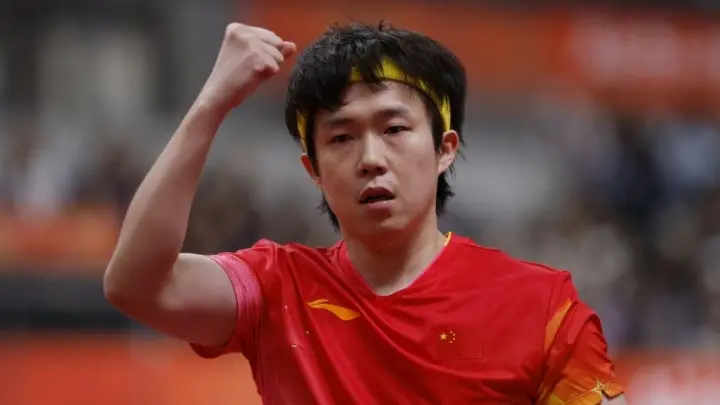
Wang Chuqin arrived at the 2026 Asian Games in Aichi-Nagoya as China’s table tennis talisman. He left with three silver medals, three finals lost, and a confession that he no longer feels the joy he once did on court.
The men’s singles final on Sunday was the most painful chapter. Lin Shidong, his national teammate and the sport’s newest force, beat him 4-0. It was the second time in Nagoya that Lin had swept Wang in a final: the pair had already met in the mixed doubles decider, where Wang and Sun Yingsha lost 0-4 to Lin and Kuai Man. Across those two finals, Wang won zero games out of eight.
The pattern extended further. In the men’s team final, China fell to Japan, and Wang was beaten 0-3 by Japan’s Tomokazu Harimoto. Add it up and Wang lost three matches at these Games without taking a single game in any of them — a stark reversal for a player who won four gold medals at the Hangzhou Asian Games three years ago.
After the singles defeat, Wang did not hide. “I feel like I’ve been draining myself the whole time,” he told reporters through a translator’s paraphrase. “I don’t know why, I just feel tired. After the World Cup and the World Championships, I can’t quite find the feeling I used to have — that enjoyment, that love of being on court.” He added that he had kept trying to motivate himself and wanted to win every match, but his reactions felt slow and his focus kept slipping.
Former national team player Cheng Jingqi offered a gentler read on a television panel, saying Wang had given everything but simply was not at his physical or mental best. “He was always trying to fire himself up,” Cheng said. “But the feeling for the game was dull, a bit blunted.”
For Lin Shidong, the week was a coronation. The young right-hander took gold in the men’s singles, men’s doubles with Huang Youzheng, and mixed doubles with Kuai Man. One detail raised eyebrows back home: in the men’s team final, Lin was fielded as the third player and appeared in only one match, which he won. Fans questioned the lineup as China surrendered the team title to Japan.
Wang’s frustration spilled onto social media, where thousands of comments flooded his Weibo page within minutes of the final. Some supporters urged patience; others asked whether the schedule had simply worn him down.
China still dominated the table tennis programme overall, finishing with six golds and four silvers across seven events. Wang Manyu beat Sun Yingsha for the women’s singles title, and the women’s doubles, men’s doubles, mixed doubles and women’s team crowns all went to China. The men’s team silver was the only gold the squad missed.
Yet the story that lingered was Wang’s. At 26, he remains one of the most gifted players of his generation, but Nagoya left him searching for answers — and for the feeling that once made the sport fun.