A Four-Step Method Turns Concrete Cracks From Guesswork Into Calculation
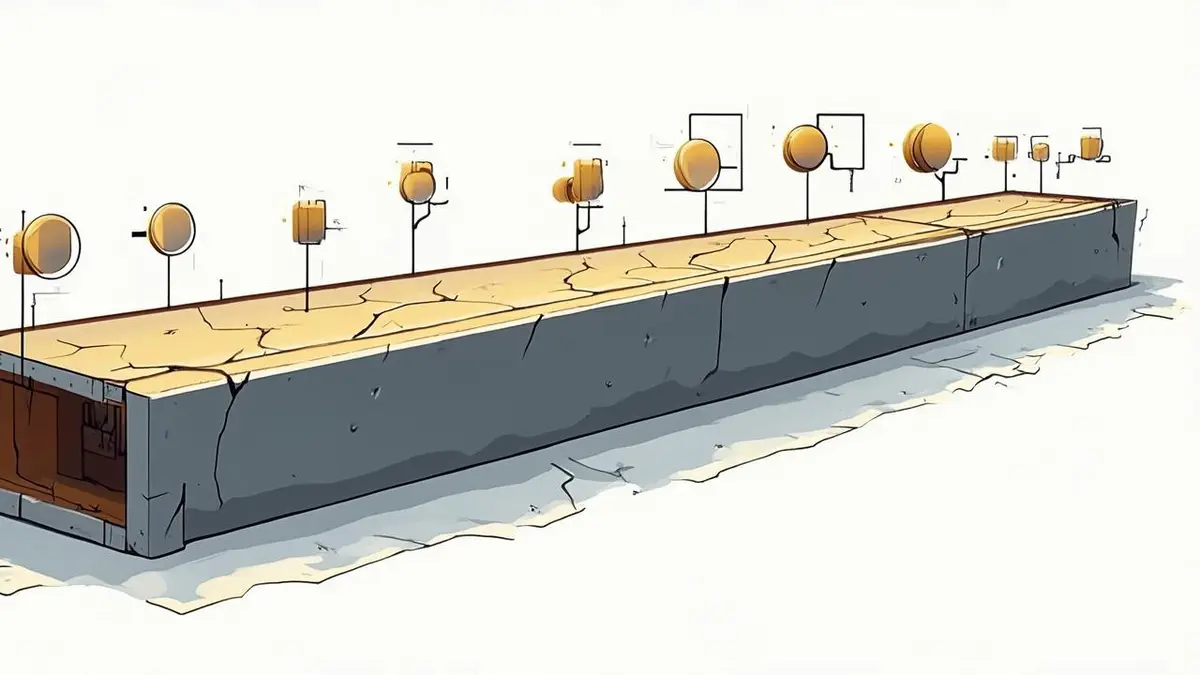
A finished box girder sits waiting for acceptance, and the only thing standing between it and the sign-off sheet is a set of cracks. They run in neat lines, in a sensitive spot, and almost everyone on site reads them the same way: load-bearing cracks. In Chinese construction practice, the remedy for that verdict is usually two words — knock it down. Behind those two words sits a bill in the tens of millions of yuan.
That is the scene a science blogger lays out in a post describing what he calls a four-step method for identifying cracks. The author’s argument is not that expertise is useless but that it comes second. In crack diagnosis, he writes, logic leads and professional judgment follows. The design institute, the supervision unit, the inspection company and a provincial transport department expert panel had all agreed the cracking was structural. The author says the conclusion was full of holes and would not stand up.
The doubts are simple questions anyone can ask. Why did this one span crack when hundreds of others in the same structure did not? Why did the cracks appear at the bottom but not the top? Why did the middle beam crack while the edge beams stayed sound? And why, if the cause were the load the beam was designed to carry, would the pattern look like this at all? A load explanation has to account for every one of those asymmetries. If it cannot, the author argues, it is not an explanation — it is a label.
The four steps work outward from those questions. First, establish what the crack actually looks like: direction, width, length, position, and whether it is growing. Second, ask what loading pattern could physically produce that shape, and check whether the structure was ever subjected to it. Third, test the hypothesis against the rest of the structure — if the theory predicts cracking elsewhere and nothing cracked there, the theory is in trouble. Fourth, only then bring in the specialists, and give them a specific question to answer rather than a verdict to defend.
The stakes are concrete, in both senses. Demolishing and recasting a box girder costs money, delays a project, and can push a schedule past its contractual deadlines. But the opposite error — waving through a beam that really is structurally compromised — is worse, and the author is not arguing for leniency. He is arguing for sequence. Experts who are handed a conclusion tend to confirm it; experts asked a falsifiable question tend to test it.
The post is a reminder of how much engineering judgment rests on reasoning that never appears in a report. A panel’s authority is real, but authority is not evidence, and the questions that broke this diagnosis required no instruments at all — only the habit of asking why the pattern is not uniform. The author never says what happened to the beam in the end, which leaves the reader with the method rather than the outcome.
For anyone who signs off on built things, the lesson travels well beyond one bridge. Cracks are data. The interpretation is a hypothesis, and hypotheses are supposed to survive attempts to kill them before they are allowed to kill a structure — or a budget.