Huawei Takes Aim at Bosch's Brake Business With a New Aion
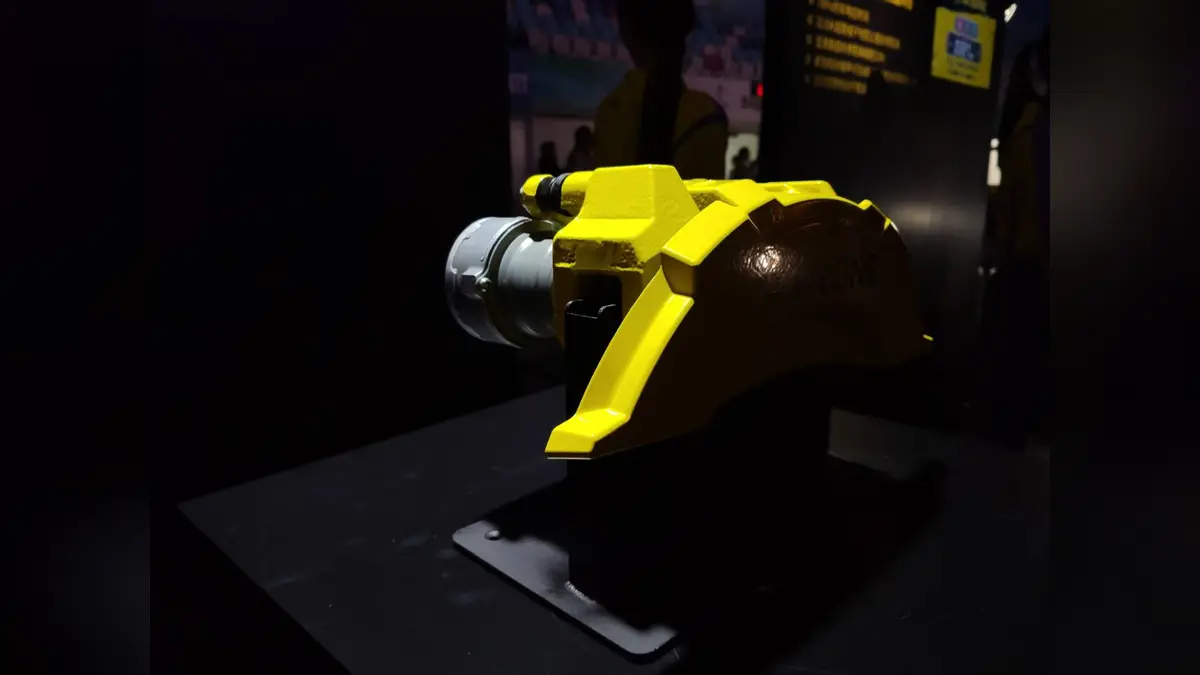
Bosch once held around 90% of China’s brake-by-wire market, a near-monopoly built on hydraulic systems that have anchored car braking for decades. That position is now being tested from an unexpected direction: Huawei, the telecoms and smartphone giant that has spent years pushing deeper into car components.
The test case is the GAC Aion Ray7, a mid-size all-electric coupe that opened pre-orders on the evening of October 17, 2026, priced from 128,800 yuan to 158,800 yuan. The car measures 4,960mm long with a 2,920mm wheelbase. Its headline claim is a world-first: a chip-level integrated drive-and-brake architecture, built around Huawei’s DriveONE EMB, a fully electric mechanical brake system. In plain terms, the hydraulic fluid, pumps and lines that normally connect pedal to wheel are replaced by electric motors at each corner, commanded by software.
Why does that matter beyond one model? Because the hydraulic brake stack is one of the last comfortable profit pools in the traditional parts business. Bosch’s dominance there has been remarkably durable, and Chinese suppliers have spent years trying to crack it. An electric brake system is simpler mechanically, easier to integrate with a car’s central computer, and — crucially for Huawei — a natural extension of the drive units and smart-driving hardware it already sells to automakers.
The Ray7 also fits a pattern. Huawei has repeatedly said it does not build cars, yet its parts and software keep appearing under more badges, from premium brands to mass-market sedans. Each new component widens its footprint inside a partner’s vehicle and raises the cost of switching away.
For buyers, the pitch is familiar: more precise braking, less maintenance fluid, and a car that can be updated over the air. For the industry, the question is whether a brake system sold as a chip-level module becomes a commodity the way electric drive units did, or whether safety-critical hardware keeps its incumbents entrenched.
There is a cautionary backdrop. Chinese car safety has been under unusually close scrutiny this month after independent braking tests on a luxury model produced alarming results, and regulators have been pressing automakers to test more and exaggerate less. A new brake architecture will be judged on real-world stopping distance, not on a spec sheet.
What to watch is adoption. If other automakers follow Aion onto electric brakes, the hydraulic incumbents face a genuine share shift in a market they have owned for a generation. If the Ray7 stays a one-off showcase, Huawei’s parts ambition will look more like a long negotiation than a breakthrough.