China's Smart Car Industry Enters Its Rule-Bound Era
For most of the past decade, the launch event for a Chinese smart car followed a familiar script: a long list of sensor counts, chip benchmarks and parking scenarios, all designed to prove that one brand had out-engineered another. That script is being rewritten. At the 2026 World Intelligent Connected Vehicles Conference, which opened on October 21 in Beijing’s Yizhuang district, the conversation moved from comparing parameters to comparing safety, according to industry commentary from the event.
The conference was hosted jointly by the Ministry of Industry and Information Technology, the Ministry of Transport and the Beijing municipal government, a combination that signals the topic is no longer treated purely as a consumer-electronics race. Speakers and exhibitors framed intelligent connected vehicles as leaving behind what one account called a single-point breakthrough narrative — the idea that one clever sensor or one clever algorithm would settle the market.
The most concrete shift concerns safety. Instead of being a final inspection hurdle passed just before a car goes on sale, safety is increasingly being treated as a precondition for market entry and for every subsequent software update. That matters because modern cars receive over-the-air changes long after delivery, meaning a vehicle approved in one state can behave differently a year later. Regulators, in other words, are moving upstream.
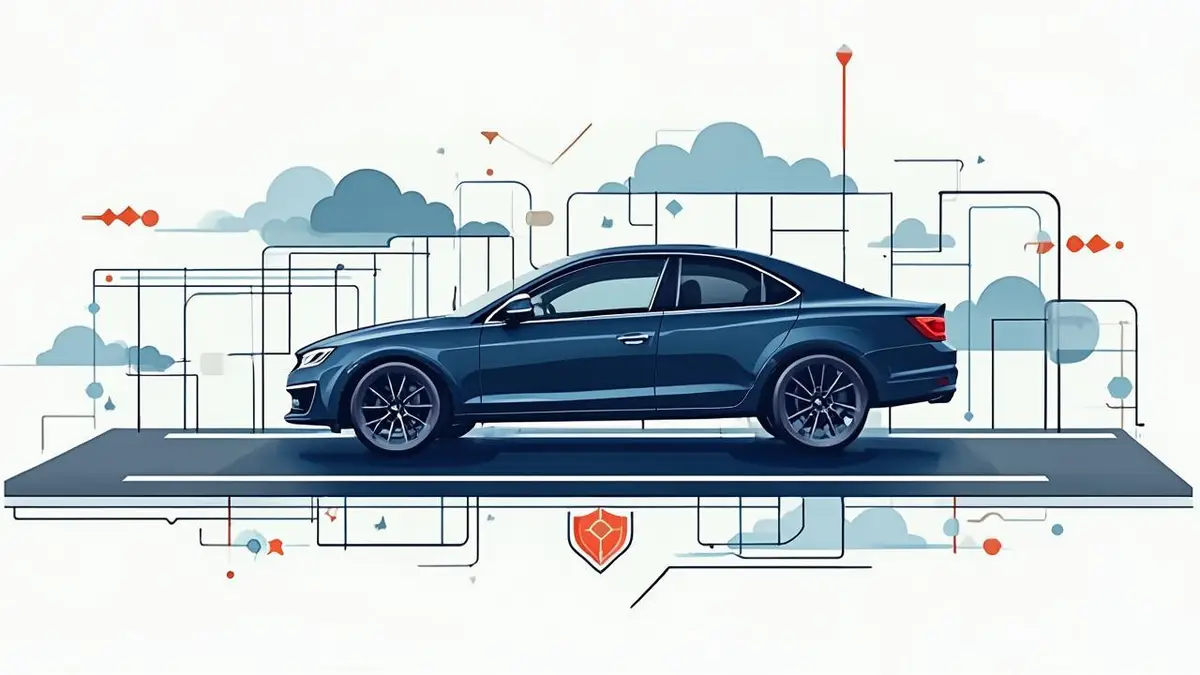
The second shift is architectural. Intelligence is being redefined from an ever-longer configuration list — more cameras, more lidar, a bigger screen — into a rebuild of the system that connects the car, the road and the cloud. In that framing, a vehicle’s competence depends as much on roadside infrastructure and data links as on the silicon inside it. It is a harder story to sell in a showroom, and a harder one to benchmark in a press release.
Together, the two changes point to a period of rule constraint for the industry. Carmakers that built their marketing on superlatives now face a vocabulary problem: the numbers that once differentiated them are becoming table stakes, while the things that matter — validated safety cases, update discipline, system integration — are less photogenic. The same pressure is visible across the sector, from new rules on driver-assistance claims to a broader push to test more and exaggerate less.
For global readers, the significance is that China’s smart car market is the largest live experiment in putting assisted and automated driving on public roads at scale. What its regulators decide about pre-approval and software updates tends to travel, because the same suppliers and platforms serve export markets.
The signal to watch is whether the safety-first framing shows up in actual approval timelines and in how carmakers advertise. If launch events start leading with validated safety cases rather than sensor counts, the rule-bound era will be real rather than rhetorical. If the old spec sheets return unchanged, the conference will have been a mood, not a threshold.