Why Small Animals Live in Slow Motion, According to Science
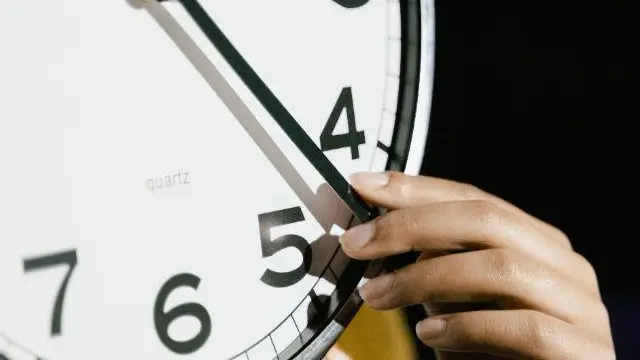
If you have ever tried to swat a fly, you know the frustration. Your hand moves fast, but the fly leaves first, as if it saw the strike coming. The usual explanation is “reflexes,” but researchers in animal behavior and neurobiology have found something deeper at work: small animals do not just react faster, they may actually experience time differently.
The pattern shows up across the animal kingdom. Small creatures tend to have a higher metabolic rate per unit of body mass, and their nervous systems sample the outside world at a higher rate. Scientists measure this with a concept called the critical flicker fusion frequency: the speed at which a flashing light stops looking like separate blinks and merges into a steady glow. For humans, that threshold sits somewhere around 60 flashes per second. Many birds, insects and small mammals push well past it.
Think of a film projector. Movies look smooth because frames arrive quickly enough that the brain stitches them together. If a creature’s visual system refreshes at a much higher rate, a world that looks continuous to us would appear jerky and slow to them. A fly watching a human hand descend might perceive not a swift slap but a leisurely approach, giving it time to calculate an escape.
Body size, not intelligence, seems to drive much of the effect. Elephants, with their enormous mass and slower metabolisms, appear to sit at the other end of the spectrum. Some studies suggest their flicker fusion rate is lower than ours, meaning a fast-moving object could blur past them in ways we would notice clearly. Dogs, somewhere in between, may see television screens as flickering rather than smooth, which is one reason many of them ignore what is on screen.
This has practical consequences. It helps explain why flies are so hard to catch, why some birds can snatch insects out of the air at speed, and why certain species react to threats almost before a human registers them. It also matters for how we design the world: lighting, screens, and even vehicle safety could look very different if we accounted for how other species perceive motion.
None of this means small animals are “smarter” or that time literally bends around them. The physics of relativity stays out of it. What changes is perception, the brain’s sampling rate, shaped by evolution to match each creature’s size, energy needs and survival pressures. A hummingbird hovering at a flower and a tortoise crossing a garden are both living in real time, just tuned to different clocks.
The next time a fly escapes your hand, it is worth remembering that you are not simply too slow. You are living in a different temporal world, one calibrated for a large, warm-blooded body. The fly, small and quick, is running its own clock at a pace your brain was never built to follow.