Porsche's Top Seller Wins Again While Her Dealer Bleeds
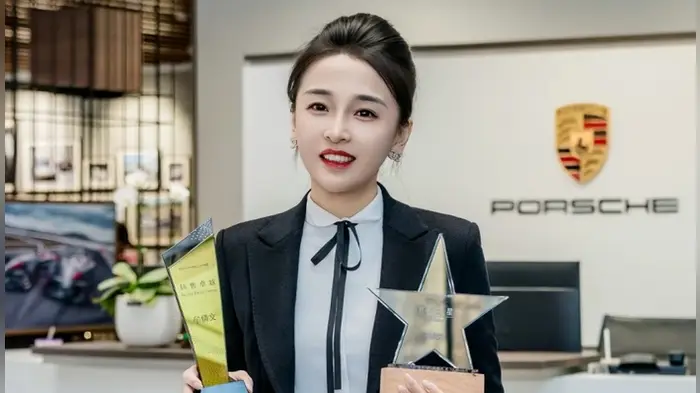
Mou Qianwen, a 35-year-old sales consultant at a Porsche centre in the eastern coastal city of Qingdao, has done it again. On November 1 she announced on her personal social media account that as of October 31 she had reclaimed the brand’s national sales crown, ranking first across China in both vehicles sold and sales points. It is her third consecutive year at the top of her dealership’s leaderboard.
The numbers behind the title are striking. According to the post, she sold 170 cars in each of 2023 and 2024, then pushed that to 192 vehicles in 2025. In October 2026 alone she booked 16 orders, enough to hold off every other Porsche seller in the country. For a single consultant at one showroom, that is an extraordinary volume of high-ticket metal.
Yet the company that employs her tells a very different story. The dealership belongs to Meidong Auto, a listed Chinese auto retail group, which reported a net loss of 275 million yuan over a recent six-month period. The gap between one person’s record-breaking performance and her employer’s red ink is the detail that has made the story travel across Chinese social media and business pages.
The contradiction reflects a broader squeeze in China’s traditional luxury car market. Premium European brands once commanded long waiting lists and fat margins in the world’s largest auto market. Now they face aggressive competition from domestic electric vehicle makers, heavy discounting across the sector, and consumers who are more cautious about big discretionary purchases. Dealers carry the cost of floor space, inventory and staff even when showroom traffic thins.
In that environment, a salesperson who can consistently move nearly 200 cars a year becomes a marketing asset in her own right. Mou has built a personal following online, and her monthly results are now reported almost like sports scores. Chinese media have noted her long run of annual titles, turning her into a rare celebrity in a trade usually invisible to the public.
Her success also highlights how unevenly the pain is distributed. A star consultant can thrive on relationships, repeat customers and a reputation that draws buyers from beyond her city. The dealership, by contrast, must absorb rent, financing costs and the price cuts needed to keep cars moving. Individual brilliance does not fix a structural problem.
For global readers, the story is a window into how China’s car retail sector is being reshaped. The era when a Porsche franchise was a licence to print money has faded. Dealers are consolidating, cutting costs and rethinking how they sell. Some are betting more heavily on online personalities and direct outreach to wealthy buyers.
What happens next will be watched closely. If Mou can keep posting record numbers while her employer returns to profit, it would suggest the dealer model can adapt around its best people. If her sales stay high and the losses continue, it will confirm that one exceptional seller cannot offset a market that has fundamentally changed. For now, her October tally of 16 orders stands as both a personal triumph and a question mark over the business behind her.