Why Modern Chinese Buses Ride Rougher Than 1990s Models
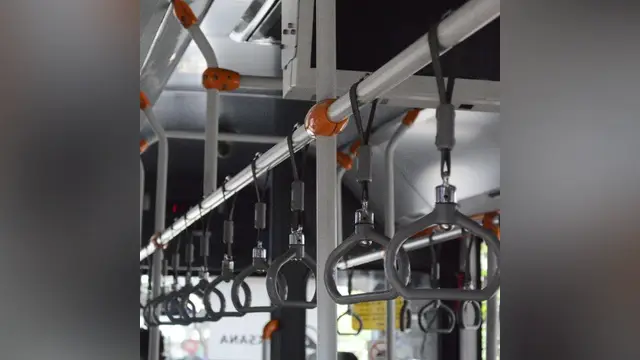
A question circulating on Zhihu, the Chinese question-and-answer platform, has struck a nerve with commuters: why do today’s buses feel so much bumpier than the ones people remember from the 1980s and 1990s? The poster, a self-described transport enthusiast who photographs and writes about buses, begins with a concession. It may genuinely not be nostalgia. On paper, a Chinese-built city bus today beats its 1990s predecessor on almost every measure, and the roads underneath it are paved far better than they were. Yet the ride and the condition of the vehicle do not necessarily feel better.
The core of the argument is that the underlying technology has not moved much. Air suspension, automatic transmissions and suspended driver seats, the components that most directly shape ride stability, were mass-produced and fitted to bus product lines in major industrial countries back in the 1960s. Since the late 1990s, the poster says, bus manufacturing internationally has seen no revolutionary change, including fuel-cell buses and fast battery-swap electric coaches. In other words, a new bus is not riding on a fundamentally newer idea of what a bus is.
If the hardware is broadly settled, the difference has to come from somewhere else: from what gets specified, bought and maintained. And that is where the comparison with the past becomes uncomfortable. The buses of the 1980s and 1990s that Chinese passengers remember as steady were often built to a standard set by a state planner or a large public transport operator with a long horizon. Fleets were kept for years and repaired rather than replaced. A rough-riding bus was somebody’s problem, and somebody had to fix it.
Today’s procurement is more varied and more price-sensitive. Cities run large fleets, tenders are competitive, and operators juggle tight budgets. The components that smoothen a ride, such as better dampers or more sophisticated suspension tuning, are exactly the kind of equipment that can be trimmed without changing the spec sheet in any obvious way. A bus can look modern, carry more passengers and use less energy while riding worse than a machine built forty years ago to a heavier, slower, more generous standard.
The poster’s framing is useful because it separates two things passengers often merge: performance and experience. Acceleration, noise at low speed and energy efficiency have all improved. The felt quality of a journey, vibration through the floor, the way a body settles after a speed bump, depends on a narrower set of choices made by people who are not on the bus. The enthusiast’s conclusion is not that Chinese buses have got worse at engineering. It is that the parts of the ride that matter to a standing passenger are the parts most easily traded away.
For global readers, the discussion is a window into how Chinese urban transport is debated from the inside. Zhihu threads like this one mix professional knowledge with everyday complaint, and the platform has become a place where engineers, hobbyists and commuters argue over details that rarely surface in official statistics. The bus is an unusually good subject for that argument, because almost everyone in a Chinese city has a strong opinion about the ride and almost nobody has seen the tender documents.
The obvious next question is whether operators will treat ride comfort as a specification rather than an afterthought. That would show up in procurement language, in the equipment fitted as standard, and eventually in what passengers feel when they stand in the aisle holding a handrail. Until then, the bumpy ride will keep generating threads, and the 1990s will keep looking smoother than it probably was.