A Robot Startup's Answer to GPT-6: Two Million Shipments and a Compute Ledger
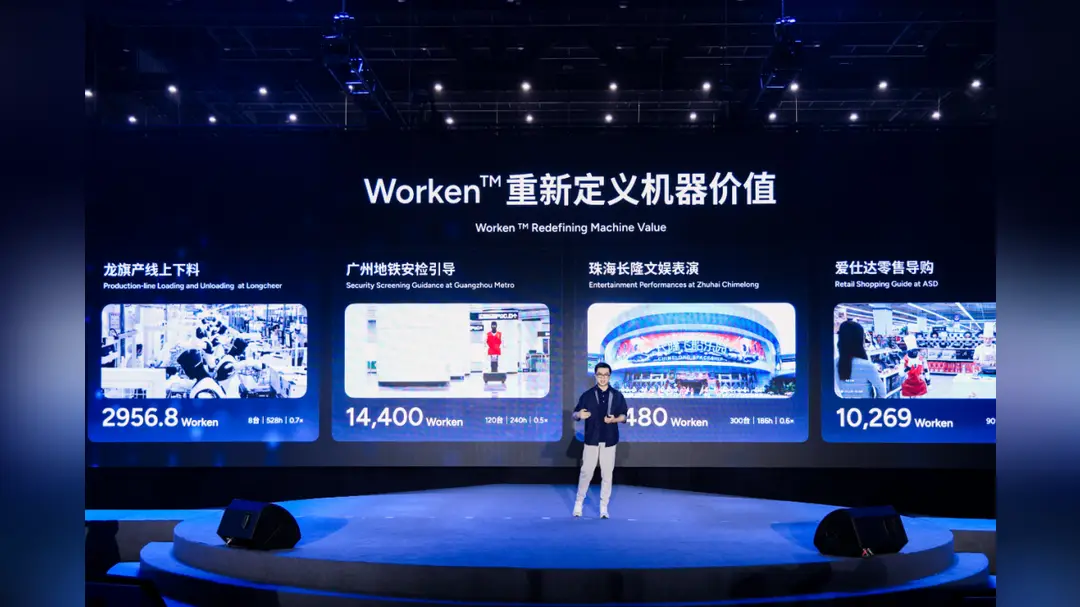
The question hanging over China’s embodied-AI industry in 2026 is blunt: after GPT-6, does a robot company still have value? AgiBot, the Shanghai-based humanoid and wheeled-robot maker known in Chinese as Zhiyuan, used a launch event this week to answer it on its own terms, leaning on a shipment figure of 20,000 units and a compute accounting framework it calls Worken.
The anxiety is real. GPT-6 Astra, the newest general model, has demonstrated embodied control abilities that make the line between software intelligence and physical skill look thinner than it did a year ago. If a large model can plan and control motion, the argument goes, the companies that build bodies and train task-specific policies could be squeezed into contract manufacturing.
AgiBot’s counter-argument is that the hard part was never the demo. Getting a robot to stack a box once is a research result; getting thousands of robots to do it reliably in warehouses, factories and retail back rooms is an operations problem measured in uptime, spare parts and retraining cycles. The company frames Worken as a way to account for that compute honestly, separating what the model does from what the machine spends to execute it.
The shipment number is the more concrete claim. Reaching 20,000 units puts AgiBot among the larger Chinese embodied-AI shippers, and volume changes the economics of everything downstream: sensors, harmonic drives, batteries and the service network that keeps fleets running. It also generates the data that policy training feeds on, which is the asset a pure model provider cannot buy quickly.
The timing reflects a broader mood shift in the sector. Capital is moving from storytelling to delivery, and investors have started asking for deployment numbers rather than videos. That pressure is visible across Chinese robotics, where humanoid makers have been pushing aggressive price points on entry models while earning their margins on specialized machines.
AgiBot’s event was light on the kind of viral stunt that defined earlier robot launches. Instead it spent its time on the unglamorous middle: how compute is allocated between a cloud brain and an on-board controller, how tasks are decomposed, and what happens when a model is confident but a gripper is not. That is a bet that the next differentiator is reliability engineering, not benchmark scores.
It is not a bet without risk. If general models keep improving at the pace of the last year, the value of proprietary robot software could compress fast, and Chinese makers would compete mainly on hardware cost, where margins are already thin. The 20,000-unit base gives AgiBot room to argue otherwise, but only if those machines stay in service and keep generating useful work.
For global observers, the interesting signal is not whether a humanoid can dance. It is whether Chinese robot firms can turn shipping volume into a durable data and service moat before general-purpose AI makes their software interchangeable. AgiBot has now staked its public case on exactly that transition.