Why Every Chinese App Wants to Lend You Money
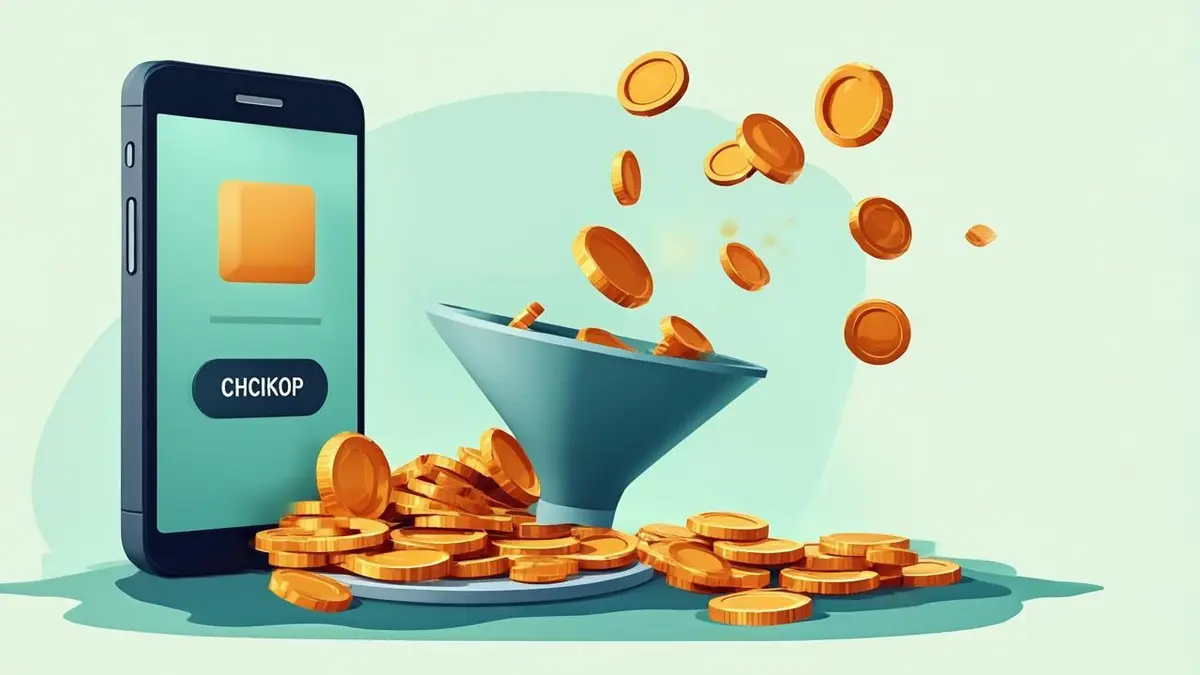
Open almost any popular app in China — a food delivery service, a travel booking site, a video platform — and somewhere between the checkout button and the coupon banner, a small prompt appears: borrow a few thousand yuan in seconds, no paperwork, money in your account today. Users have started joking that every app eventually becomes a bank. The joke is close to the truth.
The mechanic is simple. Consumer lending has become one of the few reliable profit engines in Chinese mobile software. Advertising is crowded, subscriptions are hard to sell, and commissions on goods are thin. Interest, by contrast, compounds quietly in the background. So platforms bolt a credit line onto whatever habit they already own: you order lunch there, you pay bills there, therefore they know your cash flow better than a traditional bank does.
The pitch is deliberately small. A few hundred or a few thousand yuan, framed as a temporary top-up rather than a loan. The language avoids the word debt, preferring phrases like spending额度 or available balance, as though the money were already yours. Repayment is scheduled around payday, so the deduction feels like a subscription rather than an obligation. What looks like convenience is a carefully designed funnel.
The economics work because of scale and data. A platform that sees your orders, your commute and your rent payments can price risk far more precisely than a branch manager ever could. That precision lets it lend to people banks would refuse — and charge them accordingly. Annualized rates on some of these products run well into double digits once service fees are included, and the fees are often displayed in daily terms, which makes them feel trivial.
The business model has a second layer. Many of these apps do not lend their own money at all. They act as a storefront, matching users to licensed lenders, consumer finance companies or trusts, and take a cut for the introduction and the data. The platform carries less balance-sheet risk, the lender gets customers, and the user gets cash in minutes. Everyone wins except, sometimes, the borrower.
Regulators have noticed. Over the past several years, Chinese authorities have pushed platforms to disclose real interest rates, cap certain fees, and stop aggressive marketing to young and low-income users. Some apps responded by softening the wording; others simply moved the prompt one screen deeper. The cat-and-mouse quality of the whole thing is telling. If the offer were genuinely attractive on its merits, it would not need to be hidden between a discount coupon and a confirmation button.
For global readers, the pattern should feel familiar. Buy-now-pay-later services in the United States and Europe, overdraft products at retail banks, and credit lines attached to shopping apps all follow the same logic: reduce the friction of borrowing until it stops feeling like borrowing. China is simply a few years ahead, with a mobile payment culture that makes the transition seamless. The lesson is not that Chinese consumers are uniquely reckless. It is that a well-designed default is very hard to refuse — and that the design is rarely accidental.
So the next time an app offers you money you did not ask for, read the daily rate, not the headline. The product being sold is not the loan. It is the habit of saying yes.