How a Single Cell Knows Where to Build an Eye
A fertilized egg has no eyes, no heart and no left or right. Yet within weeks it produces a body in which every organ sits in the correct place. How does a cell that has never seen a body know where the eye belongs? That question, popularized on the Chinese Q&A platform Zhihu, has kept developmental biologists busy for more than a century.
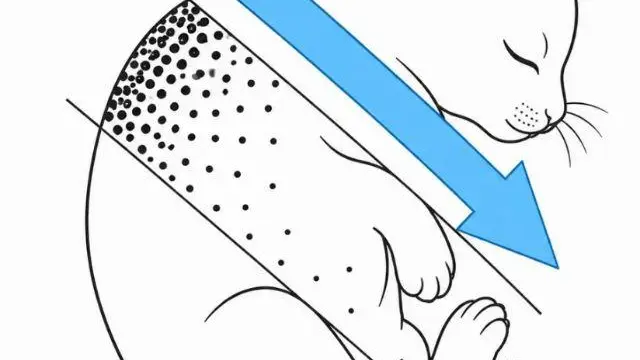
The first clue came from a deceptively simple observation about color. Most animals with two-tone fur or skin are dark on the back and light on the belly. The pattern is so common — mice, deer, fish, birds — that it must be written into the rules of development rather than learned. The reason is chemistry. Cells on the back and cells on the belly sit in different environments, and each releases different signaling molecules. Those molecules spread and form gradients, and a cell reads the local concentration to decide what to become. Color is simply the easiest gradient to see.
This idea has a famous origin story. In the 1920s, German embryologist Hans Spemann and his student Hilde Mangold transplanted a small patch of tissue from one amphibian embryo to another. The grafted tissue didn’t just survive. It instructed surrounding cells to build an entire second body axis, producing a two-headed tadpole. The patch became known as the organizer, and the experiment won a Nobel Prize. It proved that embryos are not built from a fixed blueprint but from conversations between cells.
Modern genetics filled in the vocabulary. A small set of genes — given names like Hox, Pax6 and Sonic hedgehog — act as coordinates along the body. Pax6, for instance, helps switch on eye formation. Remarkably, the same gene does the job in fruit flies, mice and humans. Switch it on in the wrong place in a fly and an eye grows on a leg. Evolution reuses the same toolkit over and over, changing only when and where each gene fires.
Gradients explain more than color. A developing limb needs to know which end is the shoulder and which is the fingertip. A neural tube needs to know which side becomes the brain and which the spinal cord. In each case, a small group of cells releases a signal, the signal diffuses, and neighbors respond according to how much reaches them. It is less like a blueprint and more like weather — patterns emerging from local rules.
Scientists in China and elsewhere now map these signals cell by cell, using fluorescent markers and single-cell sequencing to watch embryos develop in real time. The work has practical weight. Understanding how organs are positioned helps researchers grow replacement tissue from stem cells, and helps explain why some birth defects occur when a gradient is too weak, too strong or shifted.
The old question — how does a cell know where the eye goes — now has a partial answer. It doesn’t know, exactly. It senses its neighbors, reads the chemistry around it, and follows rules that evolution has been refining for hundreds of millions of years. The body is not a plan. It is an agreement.