IEM Beijing Opens With a Harsh Lesson for Chinese CS2 Fans
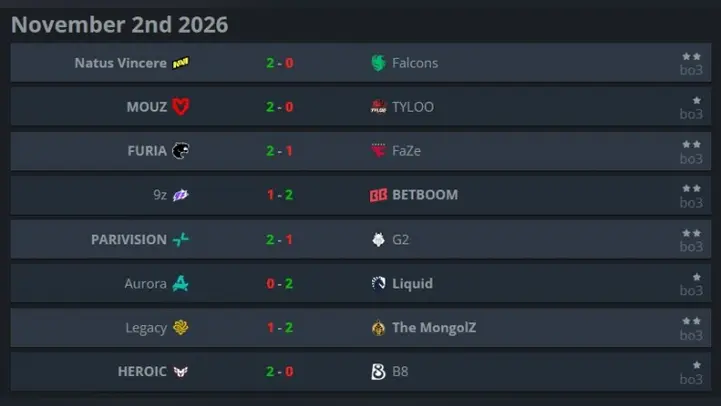
The IEM Beijing group stage opened on Monday with a reminder of how thin the margin is at the top of Counter-Strike 2. China’s TYLOO fell to MOUZ, and Falcons, the Saudi-backed roster many expected to contend, were swept 2-0 by NAVI. The results landed within hours of each other and immediately reshaped the upper bracket.
For Chinese fans the TYLOO result is the one that stings. The team is the country’s most established Counter-Strike export and carries most of the home crowd’s hope at an event staged on Chinese soil. Losing to MOUZ, a European side known for disciplined mid-round calls, leaves TYLOO needing a response in the lower bracket if it is to keep the run alive.
The day’s most dramatic match did not involve a Chinese team. Black Panther lost map one to FaZe after surrendering what the Chinese broadcast described as a stunning comeback, then took the next two maps to complete a reverse sweep. In a best-of-three format, that swing is the kind of result that can decide a group.
NAVI’s win over Falcons was less a comeback than a demonstration. w0nderful finished with 38 kills against 19 deaths and a 1.75 rating across the series, a line that underlines how much firepower the Ukrainian organisation still brings. On the first map, Ancient, NAVI led 7-5 at the half and then won six straight on the attacking side to close it 13-5; Falcons briefly threatened through a five-kill round from Jingjie but could not stop the bomb from detonating.
The broader group picture is now set. In Group A, a Mongolian side came from a map down to beat Legacy, and HEROIC swept B8 in two maps. In Group B, MOUZ handled its opening opponent without much trouble. The winners move into the upper bracket, while the losers drop into elimination matches where a single bad half can end a tournament.
That structure is why the first day matters more than its scorelines suggest. IEM events use a double-elimination group stage, so a loss is not fatal, but it forces a team into a longer path through stronger opponents. For TYLOO and Falcons, the next match is effectively a pressure test of preparation and composure.
For a global audience, the event is also a look at how China hosts top-tier Counter-Strike. Beijing has become a regular stop for international esports in recent years, and the crowd response to a home team in trouble is part of the spectacle. The venue atmosphere on a losing day says as much about the local scene as a trophy does.
The story to follow is whether TYLOO can convert home support into a lower-bracket run, and whether Falcons can recover from a sweep that exposed gaps against NAVI’s individual quality. Both teams now play with little room for error, and the bracket will show quickly whether the opening day was an aberration or a signal.