Fans Race to Save Chinese Games Before Sina Cloud Shutdown
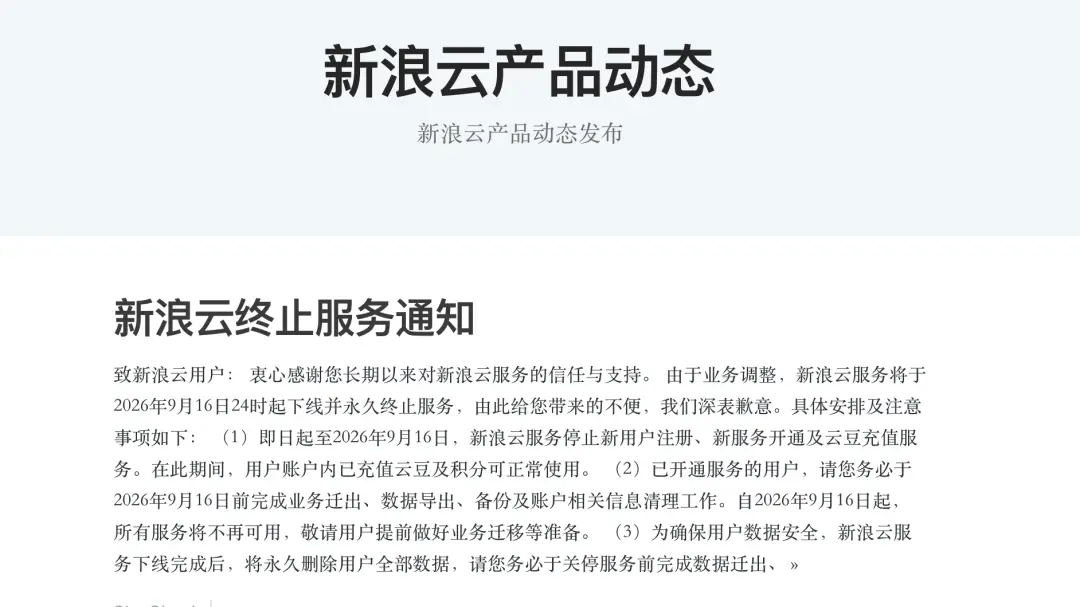
At midnight on September 16, 2026, Sina Cloud — the cloud computing arm of Chinese internet giant Sina — shut down permanently. For the month before that deadline, an unlikely coalition of volunteers worked around the clock to rescue what was stored there: forum users, video creators on the platform Bilibili, and nonprofit volunteers downloaded and backed up data right up to the final minute. Much of what they saved was fan-made games, animations and archives that had no other home.
Sina Cloud was never a household name, but it hosted a long tail of small projects that big platforms ignored. Among them were the interactive fan videos known in Chinese as guichu — remix-style animations set to music, a genre that grew up on Bilibili and became one of the defining forms of Chinese internet humor. Many creators stored source files and finished works on Sina Cloud because it was cheap and simple. When the shutdown was announced, those files suddenly had an expiry date.
The rescue was improvised and fast. Volunteers split into groups: some wrote scripts to bulk-download files, others catalogued what had been saved, and still others tracked down creators to ask permission to preserve their work. According to accounts circulating on Chinese tech and gaming sites, the effort ran until the last minute before midnight, with participants refreshing transfer queues as the servers closed.
For global readers, the episode is a reminder that internet culture is fragile. In China, as elsewhere, a generation of creativity — memes, fan games, remix videos — lives on free or low-cost cloud services that can disappear when a company changes strategy. Unlike a famous game on Steam, a guichu video or a small browser game often has no commercial value, so nobody is paid to keep it alive. Preservation depends on hobbyists.
The timing is notable. China’s game industry is booming, with big-budget titles and independent hits alike finding global audiences, and events like the Tokyo Game Show drawing Chinese studios in force. Yet the same ecosystem that produces polished commercial games also produces a vast amateur layer that rarely gets archived. The Sina Cloud rescue shows both the risk and the resourcefulness: when the platform pulled the plug, the community became the backup plan.
There are practical lessons too. The volunteers had to decide what was worth saving first, juggling storage costs and bandwidth. Some files were lost. Others were mirrored to personal drives, public repositories and community servers. The effort echoes similar campaigns around the world, from the shutdown of GeoCities to the slow decay of Flash games, where fans and archivists step in after companies move on.
For now, the rescued material exists in scattered collections, much of it undocumented. Whether it becomes a proper archive or fades into private folders depends on whether the volunteers can organize what they saved. Either way, the story has already done something useful: it reminded Chinese internet users that the culture they make is worth fighting for — even if the fight happens one download at a time, minutes before midnight.