A $27 Million Puzzle Game Tests What 'Indie' Even Means
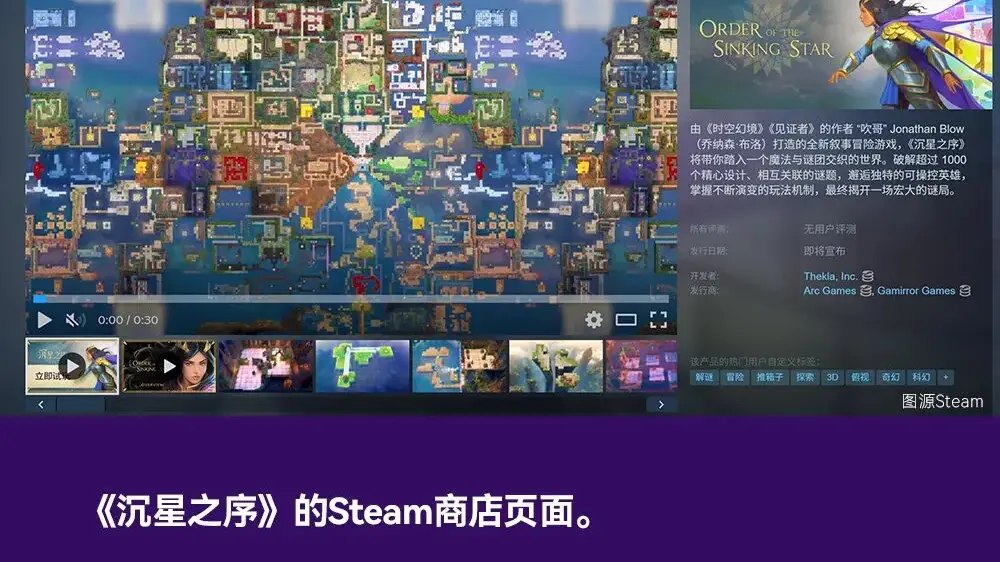
For years, “indie game” has conjured a familiar image: a tiny team, a modest budget, and a scrappy, personal vision. Order of the Sinking Star is testing that image. The puzzle game, first teased with a trailer at The Game Awards in 2025, reportedly carries a production budget of around $27 million — a figure that has ignited a fresh round of debate about whether a project of that size can still reasonably call itself independent.
The game’s scale helps explain the sticker shock. According to official information, Order of the Sinking Star contains more than 1,000 hand-crafted puzzles, a volume that implies years of labor from a sizable team. It surfaced publicly during Steam Next Fest this summer, when a limited-time demo let players sample its intricate logic challenges. The combination of polish, scope, and a cinematic reveal has made it a focal point for a question the industry has circled for a decade: does “indie” describe a business structure, a budget tier, or a state of mind?
Part of the confusion is that the term never had a fixed definition. In the early 2000s, it meant self-published games made outside the traditional publisher system, often by one or two people. But as digital storefronts like Steam opened the floodgates, successful independents grew into studios with dozens of employees and eight-figure budgets. Today, a game can be independently financed, independently owned, and independently marketed while still rivaling the production values of a mainstream release.
Order of the Sinking Star sits squarely in that gray zone. Its reported budget is large enough to fund a small studio for years, yet it is not backed by the kind of corporate machinery that defines a blockbuster franchise. Fans have seized on the number as evidence that the indie label has lost its meaning, while defenders argue that independence is about creative control, not the size of the checkbook. The debate is not merely semantic — it shapes how games are marketed, how storefronts categorize them, and how players decide what to expect.
The timing is notable. The puzzle genre has quietly become one of the most competitive spaces in gaming, with a growing audience hungry for thoughtful, brain-teasing experiences. A game with over a thousand puzzles is effectively promising dozens of hours of content, a value proposition that appeals to players who want depth over spectacle. If Order of the Sinking Star delivers, its scale could become a selling point rather than a controversy.
Still, the conversation reflects a broader anxiety in the industry. Development costs have risen across the board, and even small teams now face pressure to match the visual fidelity and feature set of larger competitors. In that environment, the romantic notion of the scrappy underdog becomes harder to sustain. Some developers worry that the term “indie” is being stretched until it means nothing at all, while others see it as a badge of creative freedom that has simply evolved with the times.
For now, Order of the Sinking Star remains one of the most anticipated puzzle releases on the horizon, its demo having drawn attention from both genre enthusiasts and industry observers. Whether it ultimately settles the definition debate is unlikely — but it may well redefine what players expect from a game that calls itself independent. The answer, as with most puzzles, will come when the pieces finally fit together.