China's Zhihu Crowd Revisits the Lives of Failed Imperial Examinees
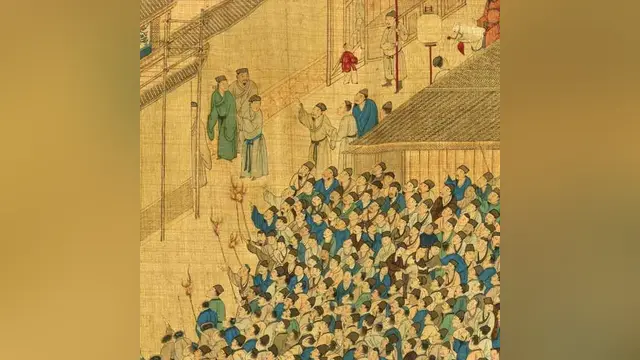
For most of Chinese history, literacy was rare and therefore valuable. That single fact shapes a popular answer circulating on Zhihu, the Chinese question-and-answer platform, to a question many readers have asked: what happened to the scholars who failed the imperial examinations?
The exams were not one test but a ladder. A candidate climbed from the county level through the prefectural and provincial exams to the metropolitan exam, and only then to the palace exam, the final round held before the emperor. A writer on Zhihu who goes by the handle Ningnan Zuohou walks through this structure in detail, noting that the palace exam did not eliminate anyone: it merely re-ranked those who had already passed the metropolitan round. Every rung below, however, shed candidates, and each level had its own policies for those it dropped.
That layering mattered because the stakes were enormous. Passing meant entry into the scholar-official class, with its stipends, legal privileges and social standing. Failing did not automatically mean destitution. The Zhihu discussion stresses that a literate man in imperial China held a scarce and marketable skill. He could teach, keep accounts, copy documents, join a magistrate’s staff, write letters and contracts for a village, or tutor the sons of a wealthy household that hoped to produce a candidate of its own.
Some of those who never reached the top nonetheless shaped the record. The question explicitly asks which failed candidates went on to influence the course of history, and Chinese readers have long enjoyed debating the answer, pointing to men whose repeated exam disappointments pushed them toward medicine, fiction, rebellion or scholarship instead. The exam system, in this view, was both a filter and a spillway: it concentrated talent in the bureaucracy, but it also pushed a steady stream of educated men into other walks of life.
The thread sits in a broader genre on Zhihu, where long-form answers mix archival detail with plain storytelling. Recent entries on the platform have ranged from the archaeology of a five-year-old boy buried in the Eastern Han dynasty to the question of whether ordinary people had any daily life during the Five Dynasties and Ten Kingdoms, a period of rapid dynastic turnover. The appeal is the same in each case: a system glimpsed through the people who lived inside it.
For a global reader, the imperial examination is often reduced to a single image of scholars hunched over essays. The Zhihu discussion offers something more textured. It is a story about labor markets, family strategy and the quiet dignity of a respectable second choice, told by people who still recognize the exam as a distant ancestor of the tests that decide their own lives.
The examination system itself is gone, abolished in the early twentieth century. But the questions it raises, about what education is for and what happens to those who do not reach the top, remain unusually alive in Chinese conversation.