Why Bronze Inscriptions Use Characters Nobody Can Read Today
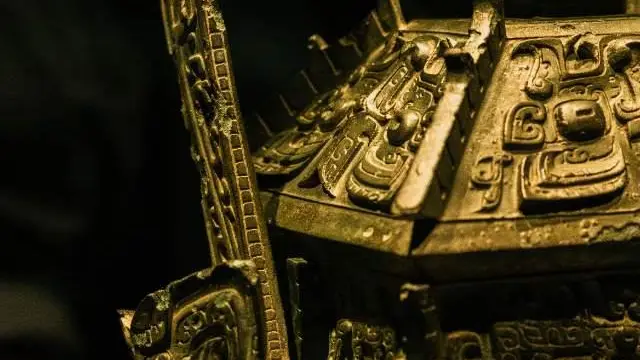
Anyone who has stood in a Chinese museum reading a label beside a bronze vessel has likely noticed something odd: the transcription includes characters no modern keyboard can produce. A question posted on Zhihu, a Chinese question-and-answer platform, asked exactly that, and the answer opens a window onto how ancient writing is preserved rather than simplified.
The reader’s example was a compound character built from the elements for boat and gate, which scholars gloss as equivalent in meaning to zhen, a first-person pronoun once used by emperors. The character is not invented. It exists in historical dictionaries, but it has fallen out of everyday use because a common substitute does the same job. Many of the strange shapes on museum labels are simply rare characters that survived only in scholarly reference works.
The main reason those rare forms appear at all is a technique called liding. The term describes the process of transcribing an ancient glyph into a modern-style character by preserving its structure rather than its sound or meaning. Scripts used on oracle bones and bronze vessels, dating back more than two thousand years, often look nothing like today’s standard characters. Scholars needed a way to write them down so that later researchers could discuss their components. Liding gave them that tool, even when the resulting character had no living pronunciation.
That choice creates a visible tension in museums and academic books. A transcription could use a familiar character with a similar meaning, which would be easier for visitors. But doing so would blur the distinction between what the inscription actually says and what a translator thinks it means. Keeping the rare form lets a specialist see the original structure at a glance. For everyone else, it is a reminder that the text on the vessel is not simply an older version of modern Chinese.
The question also hints at something broader about how China handles its written heritage. Ancient characters are not replaced wholesale by simplified ones in scholarly editions; they are preserved, annotated and explained. The result is a reading experience that can feel forbidding to outsiders but rewards patience. Museum labels often carry a modern gloss alongside the transcription for exactly this reason.
For global visitors, the practical lesson is that a bronze inscription is not a puzzle to be solved by matching shapes to familiar words. It is a layered document: the original cast text, the scholarly transcription, and the modern explanation each serve a different purpose. Recognizing the middle layer, the liding transcription, helps explain why the label looks the way it does and why some characters seem to have no home in any dictionary of living Chinese.
The discussion is a small example of how the internet has made arcane philology accessible. A question from a curious reader drew a detailed answer about a technique most people never encounter. That exchange, more than any single inscription, shows how ancient writing stays legible across millennia: not by simplifying it, but by explaining the rules that keep it readable.