A Qing Dynasty Vendor Sneaked Into the Forbidden City to Sell Steamed Buns
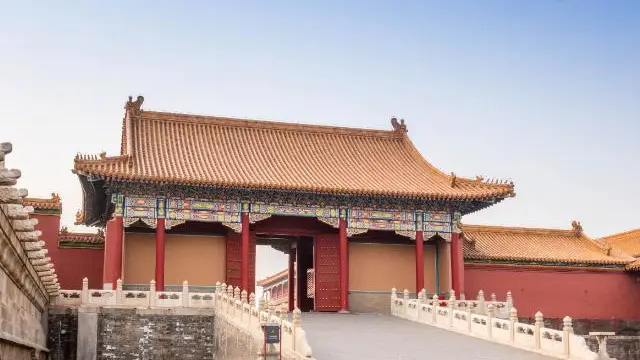
The Forbidden City in Beijing was the most tightly guarded address in the Qing empire, a walled complex of palaces where emperors lived behind layers of checkpoints, identity tokens and armed guards. So how did an ordinary street vendor selling steamed buns manage to set up shop inside it for months?
That is the unlikely tale of Wang Ku’er, a commoner from the Xianfeng era (the 1850s). According to a document from the Shenxing Si, the internal affairs bureau of the Qing imperial household that handled investigations and punishments, Wang was caught sneaking into the palace grounds to sell food. The file, dated the fourth lunar month of 1853, ordered him and an accomplice, Zhang Chuncheng, sent to Heilongjiang as punishment. Only the catalogue entry survives online, which makes the story all the more tantalising for historians and curious readers alike.
The mechanics of the caper are what make it memorable. The palace relied on a wooden identity tag, or waist plaque, to control who could pass through its gates. Wang apparently obtained or borrowed one, then walked in as if he belonged, carrying his wares. Rather than hiding in shadows, he did something almost comically bold: he sold steamed buns to the people working inside. For a stretch of time, the empire’s most secure compound had a functioning snack stall run by an outsider.
Why does a minor case from the 1850s still circulate today? Partly because it punctures the aura of total control that surrounds imperial palaces. The Forbidden City was designed to project order, hierarchy and impenetrable ritual. A vendor selling cheap breakfast food inside its walls is the opposite of majesty, and that contrast is irresistible. It also hints at how porous even the most fortified institutions can be when everyday logistics, thousands of staff, deliveries and errands, create constant traffic through the gates.
The Shenxing Si itself is a fascinating footnote. Operating under the imperial household department, it functioned as an internal court for palace personnel and intruders, dispensing punishments that ranged from beatings to exile. Sending Wang and Zhang to Heilongjiang, then a remote frontier region in the far northeast, was a standard sentence for serious trespass. The archive entry is dry and bureaucratic, but it preserves the outline of a very human story.
For readers unfamiliar with Chinese history, the Forbidden City today is a UNESCO World Heritage site and one of the world’s most visited museums, drawing millions of tourists each year. Its 600-year history is packed with grand narratives of emperors and dynasties, yet some of its most shareable stories are small ones like this. They remind us that behind the ceremonial facade, the palace was also a workplace, and workplaces attract opportunists.
Whether Wang was a daring entrepreneur, a desperate man looking for customers, or simply a lucky schemer, his story has survived where countless official chronicles have been forgotten. It is a reminder that history’s footnotes can be more entertaining than its headlines, and that even the most guarded gates have a way of letting the ordinary world slip through.