Shanghai's 1983 Landmark Hotel Reopens as a Radisson Collection
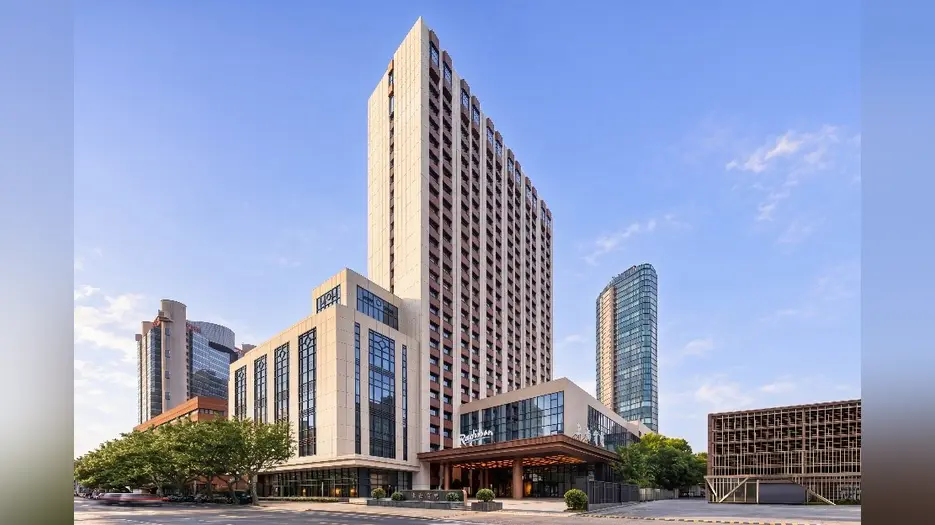
Shanghai’s skyline changes fast, but one address has held its ground since 1983. This week the Shanghai Hotel, a state-era landmark in the Jing’an Temple district, reopened under a new name: Shanghai Hotel Jing’an Radisson, part of the Jinjiang Radisson portfolio. The building’s classic bones remain; the interiors now follow Radisson’s “nature, balance, delight” design language, a softer, greener look aimed at leisure and business travelers alike.
The location is the pitch. The hotel sits in the heart of Jing’an, within walking distance of Jing’an Temple itself, the plane-tree lanes of Yuyuan Road and Wukang Road, and a short ride from the Huaihai Road and West Nanjing Road shopping districts. For a first-time visitor to Shanghai, that puts temples, boutiques, coffee shops and the city’s best people-watching within a few metro stops.
The room count is 357, a scale that keeps the property in convention and group territory while still feeling residential. The renovation keeps the original tower’s silhouette, a recognizable shape on the Jing’an skyline for more than four decades, and reworks the public spaces around daylight and planting rather than the darker, formal lobbies of the 1980s.
The reopening appeared in a weekly travel roundup that also flagged a cruise first: Explora Journeys, the luxury line from the MSC group, will open its first Asia season, with itineraries that bring a new ship into Asian waters. For travelers planning a multi-stop trip, a Shanghai city stay paired with a regional cruise is an increasingly common combination.
Shanghai’s hotel market has been through a difficult stretch, with new supply arriving even as business travel has been uneven. Rebranding an older property rather than building new is one way operators are managing costs: the structure, permits and location already exist, and the investment goes into finishes and service instead of concrete.
For international visitors, the appeal is practical. Jing’an is one of the easiest parts of Shanghai to navigate without Chinese, with bilingual signage, international restaurants and a dense metro network. A hotel with a familiar international brand and a genuinely local address gives travelers a base that does not feel like an airport transfer lounge.
The test will be whether a 1983 landmark can feel current without losing what made it recognizable. Guests booking for the winter season will be the first to judge whether the new interiors match the promise, and whether the Jing’an location still beats the newer towers across the river. For now, the address is back on the map, with a new name on the door and the same corner of the city outside.