A Sleeper Car Is Not a Living Room, Chinese Travelers Say
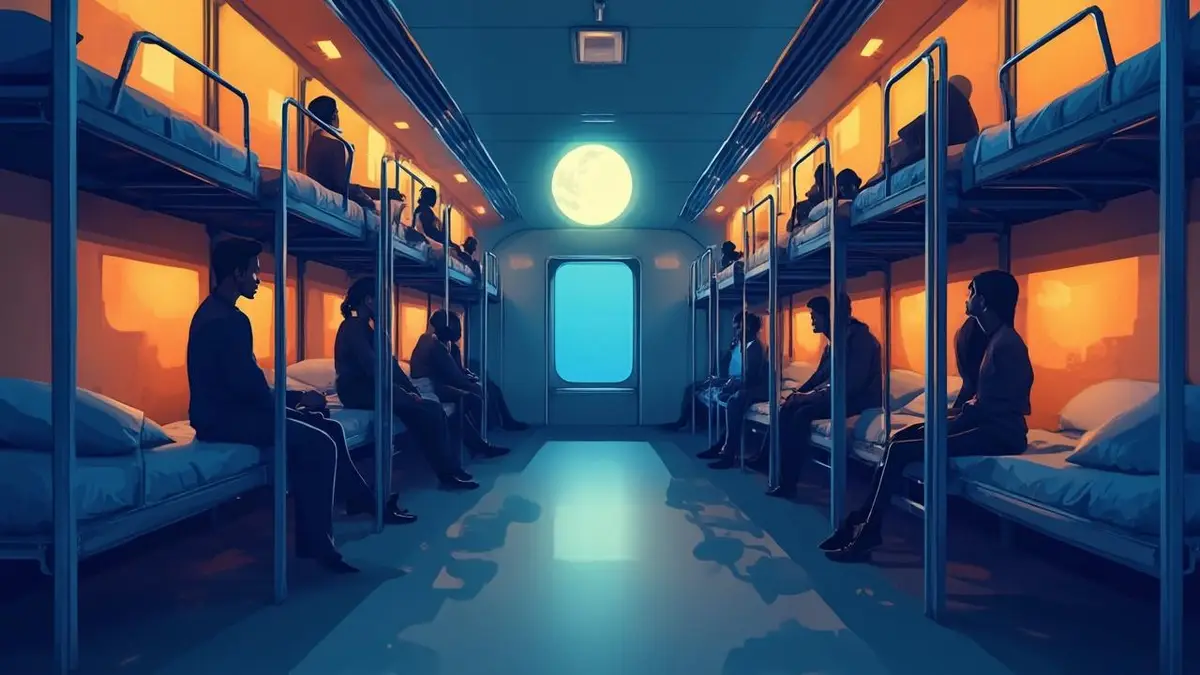
A short post about overnight trains has found a wide audience in China this week, and it is not about delays, prices or seat sizes. It is about noise. The writer described walking through a sleeper carriage that felt less like a train and more like a party: groups clustered in the aisles, voices carrying down the corridor, food smells mixing with the air conditioning, and a cramped shared space that everyone had paid for and almost no one could use comfortably. The complaint, posted in a travel feed, was blunt: a few people’s convenience had become everyone else’s problem.
What makes the post travel is the etiquette it describes. Chinese sleeper trains are a peculiar kind of shared room. A hard sleeper carriage packs six bunks into an open bay; a soft sleeper puts four behind a door. Corridors are narrow, and the space between bunks doubles as a seat, a dining table, a luggage rack and, for some passengers, a social club. On long routes, especially around holidays, strangers spend a night or more within arm’s reach of one another. The post’s author did not call for rules or fines. The suggestion was simpler and harder: keep your voice down, know where your business ends, be polite, and remember that everyone aboard wants the same thing, a calm trip and a safe arrival.
That framing is why the complaint resonated. It fits a broader conversation in China about public manners in crowded places: phone speakers on buses, queues that dissolve at the gate, picnics spread across a park bench. The sleeper carriage is an extreme version of the problem, because there is no escape. You cannot step outside for air at 2 a.m. between stations. A loud conversation is not just annoying; it is inescapable. The post drew agreement from readers who described their own overnight trips and the small, unspoken negotiations that make them work.
There is a practical side too. China’s rail network moves enormous numbers of people, and sleeper services remain the affordable way to cross long distances, particularly for students, migrant workers and families. Demand spikes around public holidays, when carriages fill and the pressure on shared space grows. In that environment, small habits carry disproportionate weight. A group that treats the corridor as a lounge does not just disturb a few neighbours; it changes the mood of an entire carriage.
The post also hints at something travel writers often miss: the journey itself is part of the trip. For many passengers, an overnight train is not dead time between destinations but a first taste of the country, a night of strangers, card games, instant noodles and window views. That experience depends on a fragile bargain. When a few people treat the carriage as private property, the bargain breaks, and the trip becomes something to endure rather than remember.
The advice offered was modest and old-fashioned: be quiet, be considerate, be steady. No app, no upgrade, no new carriage design. Just the recognition that a shared space belongs to everyone in it, and that the cheapest way to improve a journey is often the way you behave on it. For travelers heading into China’s holiday rush, it is a small reminder with a long reach.
Whether the complaint changes anything is another matter. Etiquette posts come and go, and train carriages will stay crowded. But the reaction suggests that passengers are paying attention, and that the quiet traveller is not as alone as the loudest group in the aisle might suggest.