Asian Games: China's Fencing Bronze, Table Tennis Wins, Skateboard Heartbreak
The Asian Games in Hangzhou delivered a day of sharp contrasts for Chinese athletes on September 25, with table tennis dominance, a heartbreaking fencing loss, and a sobering skateboard final.
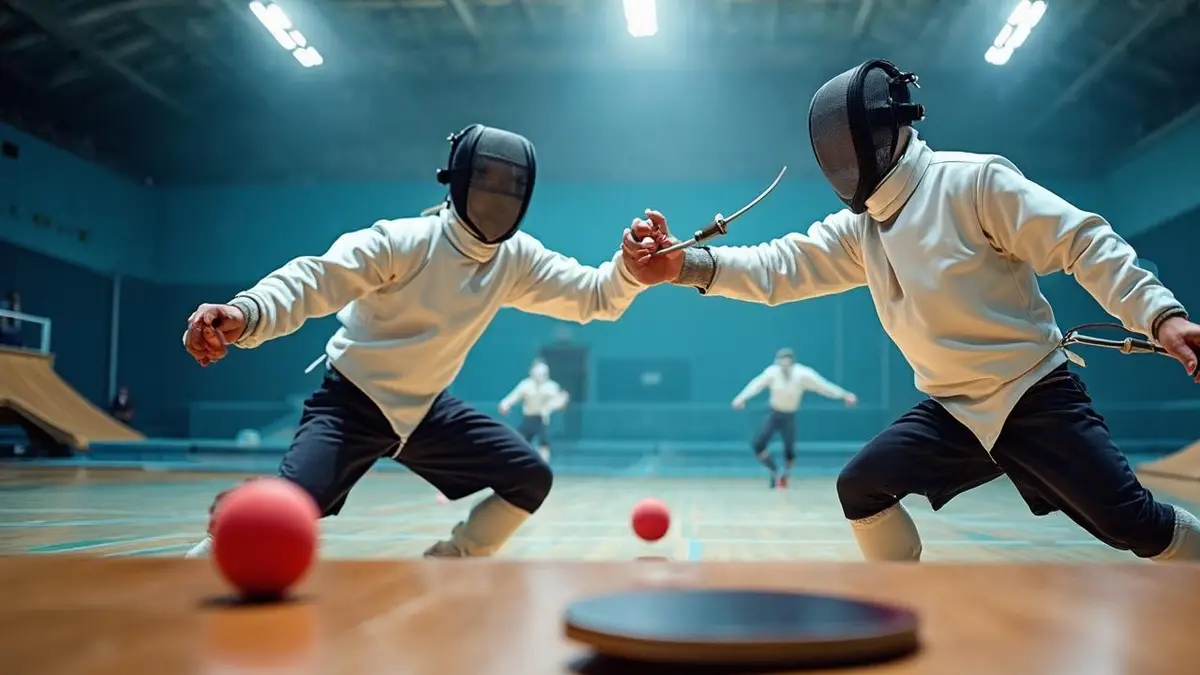
In men’s team foil fencing, China’s trio of Wei Qiao, Zeng Zhaoran, and Xu Jie fell to Japan 45-43 in the semifinals. Because the Asian Games does not hold a separate bronze-medal match in fencing, China automatically took third place. The narrow two-point margin stung, but it still marked a podium finish against a strong Japanese side that has become a regional fencing power.
Table tennis offered a more reassuring picture. Lin Shidong, one of China’s rising stars, defeated Macau’s Mai Tin Ian 4-0 in the men’s singles round of 32. After a tight first game that Lin won 11-9, he pulled away with scores of 11-5, 11-4, and 11-2. The third game was particularly ruthless: Lin rattled off ten consecutive points to leave no doubt about the outcome.
Wang Chuqin, already a household name among table tennis fans, had a bumpier path. Facing 16-year-old Thai prospect Thitaphat Prichayan, Wang dropped the first game 3-11 and later found himself level at 2-2 after a 8-11 fourth game. But the Chinese star steadied himself and closed out the match with dominant 11-2 and 11-5 games, winning 4-2. The scare served as a reminder that young international talent is closing the gap, even as China’s depth remains formidable.
In skateboarding’s men’s park final, defending champion Chen Ye of China finished eighth with a score of 49.12, well off the pace. Japan’s Koki Sasaki took gold with a score of 88.96. Chen’s disappointing result highlighted the unpredictable nature of action sports, where a single fall or missed trick can undo months of preparation. Skateboarding has been a fixture at the Asian Games since 2018, and Japan’s strength in the discipline continues to grow.
Badminton brought its own drama. In the men’s team final, China lost to Indonesia after leading 2-0, a stunning reverse that denied the host nation a gold medal. Shi Yuqi, who won his singles match, spoke afterward about his approach: “I was mostly following my opponent on court, staying patient and tracking his movement. I’ve been searching for my own form, and today I could feel my attacking rhythm coming back.” His honesty reflected the fine margins at elite sport.
Beyond the Asian Games, Chinese football fans had a moment to celebrate. Yang Mingyang, a 31-year-old midfielder born in Switzerland who later restored his Chinese nationality, made his debut for the men’s national team in a match against Maldives. “To debut for my country is a great honor,” he wrote on social media. Yang’s journey from Swiss youth football to the Chinese national team is an unusual one, and his performance adds an intriguing option to the squad.
For global audiences, the day captured the breadth of China’s sporting ambitions: excellence in traditional strongholds like table tennis, fierce regional rivalries in fencing and badminton, and the growing pains of newer disciplines like skateboarding. The Asian Games continue through early October, with more medals on the line and more stories to tell.