Why Almost Every Mammal Has Exactly Seven Neck Bones
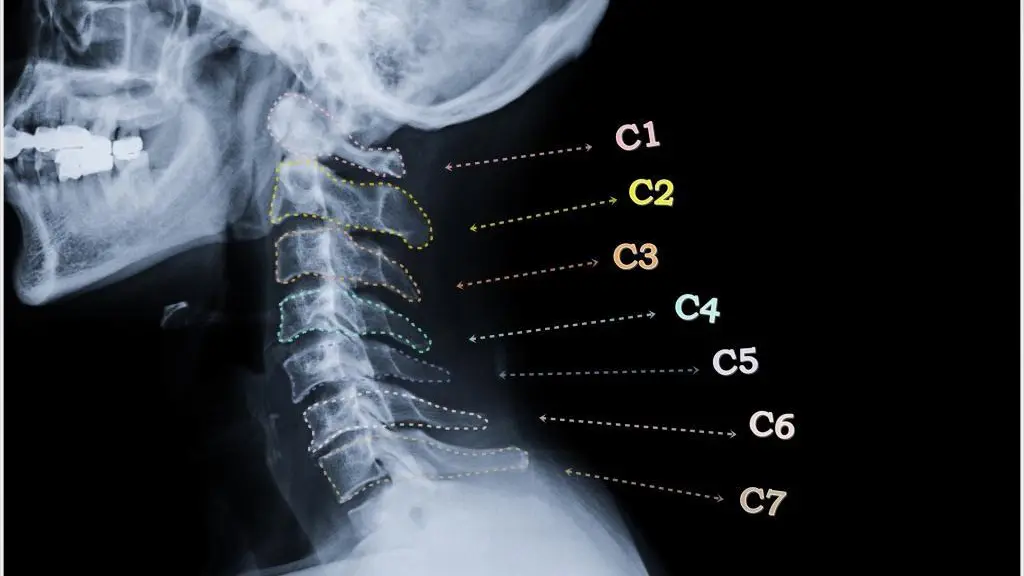
Count the bones in your neck and you will find seven. Count them in a mouse, and you will also find seven. A giraffe’s neck may stretch two meters, a blue whale’s body can weigh more than a hundred tons, and a human stands upright — yet all three carry the same seven cervical vertebrae, labeled C1 through C7. This odd uniformity was the subject of a widely read explainer on the Chinese question-and-answer platform Zhihu, where a researcher walked readers through a puzzle that has quietly fascinated biologists for decades.
The pattern is striking because it holds across mammals of wildly different sizes. Whales, the largest animals that have ever lived, keep seven. Elephants keep seven. Even the long-necked giraffe keeps seven, though each individual vertebra is enormously elongated. The number is so stable that paleontologists treat it as a near-universal rule for the group. A bat and a human, separated by tens of millions of years of evolution, share the same blueprint for the neck.
So why seven? The answer appears to lie in the deep machinery of embryo development rather than in the demands of any particular lifestyle. During early growth, a developing animal lays down a series of segments that later become vertebrae. Genes that control this process are tightly linked to other jobs — building the nervous system, forming the heart, wiring the body’s internal organs. Change the number of neck bones and you risk disturbing those neighboring tasks. Mutations that shift the count often come with serious health problems, which is one reason evolution tends to leave the number alone.
That does not mean the rule is absolute. Some sloths, famous for their slow pace, carry more than seven cervical vertebrae — manatees too. These exceptions are rare and are usually accompanied by unusual anatomy or health trade-offs. Their existence actually reinforces the main point: the system can change, but the cost is high, so most lineages stay put. The seven-bone plan is less a perfect design than a compromise that has proved good enough for hundreds of millions of years.
The Chinese explainer also touched on a related curiosity that readers often ask about: why the neck, of all body parts, seems so fixed when limbs, teeth and body size vary so freely. Part of the answer is that the neck sits at a crossroads. It must support the head, allow it to turn, and protect the nerves and blood vessels passing between brain and body. Tinkering with that junction is riskier than reshaping a limb. Evolution, in effect, has been cautious here.
For readers outside the lab, the story is a reminder that biology is full of hidden regularities. The same seven bones that let you nod and turn your head also let a whale surface to breathe and a giraffe reach the top of a tree. The article drew thousands of reactions on Zhihu, with commenters trading jokes about everything from dinosaur necks to bad posture. It is the kind of science writing that turns a trivia question into a window onto how life is built — and why some parts of the body seem frozen in time while others keep changing.
Researchers continue to study how the vertebral formula is set, using animal models and genetic tools. What they learn could inform medicine, from treating spinal conditions to understanding developmental disorders. For now, the takeaway is simple and a little humbling: whether you are a scientist in a lab or a commuter rubbing a stiff neck, you are carrying a design shared with nearly every mammal on Earth, from the smallest shrew to the largest creature in the sea.