Guangzhou Subway Charges Reader 15 Yuan for Five-Hour Book Break
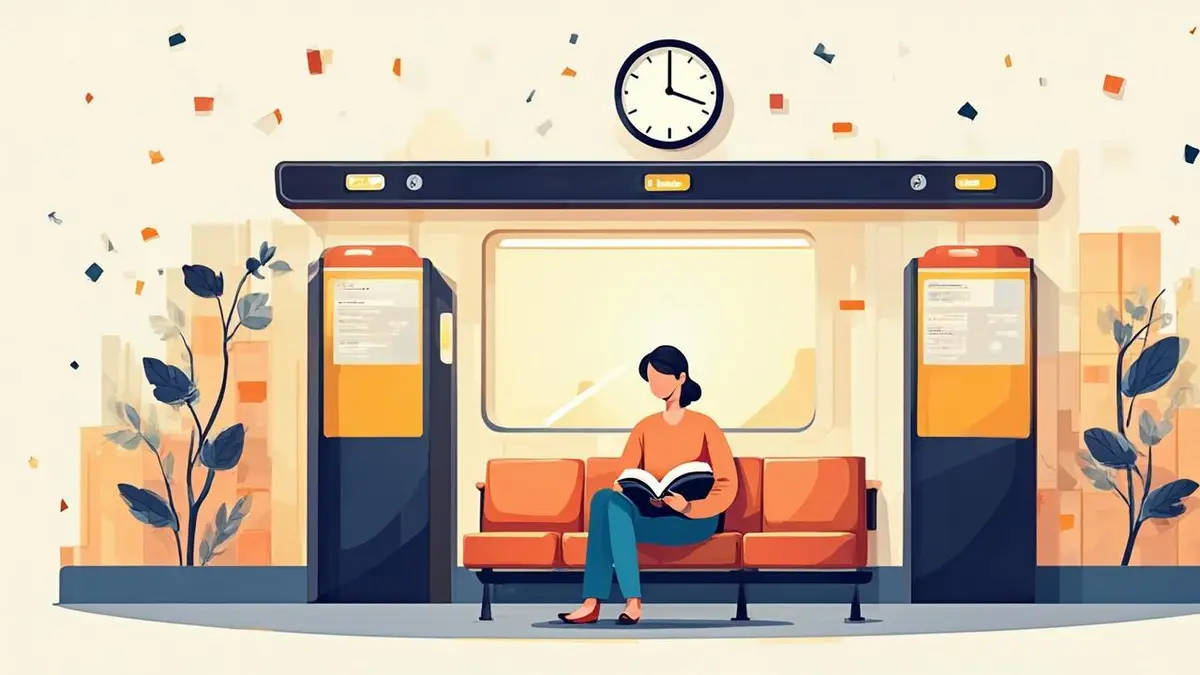
A reader in Guangzhou recently discovered that the city’s subway system charges by time, not just distance. According to a report in Chinese media, a woman surnamed Fang took Line 18 to Panyu Square station and settled into a reading space inside the station. She stayed for nearly five hours. When she tapped out, the fare gate deducted an extra 15 yuan as an overtime fee — roughly $2 — turning a quiet afternoon of reading into an unexpected bill.
Guangzhou Metro confirmed the rule. Staff told a reporter that the network sets a 270-minute limit, or four and a half hours, on any single journey inside the paid area. The logic is simple: a metro is designed to move people quickly, not to serve as a place for long stays. Passengers, the staff added, should factor their own schedules into how long they linger, including time spent in commercial or cultural spaces inside stations.
The case has resonated because it touches a tension in many Chinese cities. Metro operators have spent the past decade turning stations from pure transit into mixed-use spaces — convenience stores, vending machines, exhibitions, and in some cases small reading rooms or libraries. Guangzhou itself has experimented with book corners and cultural pop-ups in stations. These spaces are promoted as public amenities, but the fare system still treats every minute inside the gates as travel time.
For riders, the arithmetic is not obvious. The 270-minute rule is not displayed on every gate, and few occasional passengers know it exists. Fang told reporters she had no idea her reading session would count against a travel clock. The fee is modest, but the principle — that a station can invite you to sit and then charge you for sitting — is what drew attention online.
Cities elsewhere have grappled with similar questions. Some transit systems impose maximum journey times to prevent fare evasion or loitering; others allow unlimited time inside the paid area. The difference often comes down to how a city views its stations: as pipes for commuters or as public rooms in their own right. Guangzhou’s answer, for now, is firmly the former, even as it adds amenities that encourage the latter.
There is also a practical design question. If a metro wants readers, students and remote workers to use its spaces, it may need to rethink how fares are calculated — for example, by charging for entry and exit points rather than elapsed time, or by exempting designated cultural zones. Without that, every comfortable chair inside the gates comes with a hidden meter running.
The immediate lesson for passengers is to check the time limit before settling in. The broader question is whether Guangzhou and other Chinese cities will adjust their rules as stations become destinations in their own right. For now, the reading space remains open — and the clock, for anyone who stays too long, keeps ticking.