Delta Force Helps Chinese Police Break Record DMA Cheat Case
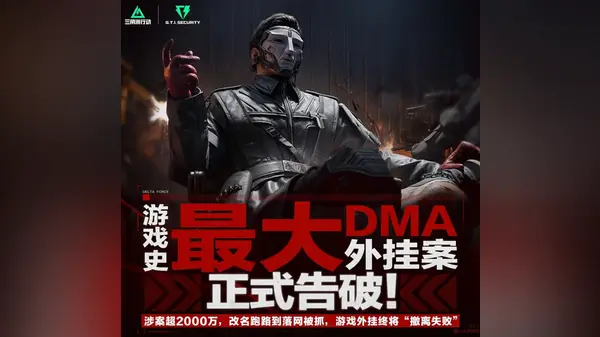
Delta Force, the free-to-play tactical shooter published by Tencent’s TiMi studio, said its security team helped police in Guangdong province break up what the game calls the largest DMA cheat case in gaming history. Sixteen suspects were detained and the value involved exceeded 20 million yuan, roughly 2.8 million US dollars, according to the announcement. The core author of the cheat and the main sales distributor were among those held, while several reseller card platforms and cheat-assisted boosting studios were shut down. The case is now moving toward prosecution.
DMA stands for direct memory access, a hardware technique that lets a device read a computer’s memory without going through the processor. Legitimate uses include high-speed data capture and diagnostics. Cheaters have repurposed cheap DMA cards, usually plugged into a spare slot on the motherboard, to read a game’s memory from a second machine. Because the cheat runs outside the game’s own process, ordinary anti-cheat software has trouble spotting it.
The “Foah” cheat first surfaced in Delta Force’s security logs in the second half of 2025. According to the game’s account, its safety team traced distribution channels and passed the findings to police, who then carried out the arrests. Delta Force has been one of the more aggressive Chinese titles on enforcement, pairing in-game detection with offline action against sellers rather than only banning player accounts.
That approach reflects a wider shift in China’s online games industry. Publishers increasingly treat cheat distribution as commercial crime rather than a nuisance, because the sums are large. Cheat subscriptions, reseller cards and paid “carry” services where a cheater boosts paying customers form a supply chain with real revenue. Shutting the head of that chain is meant to be more durable than banning individual players.
For players, the practical question is whether enforcement can keep pace with the hardware. DMA devices are sold openly online and are cheap enough that a ban wave does not end the business for long. The record value in this case is partly a sign of how lucrative the market has become, not only of how effective the crackdown was.
The timing matters too. Delta Force competes in a crowded shooter market at home and is expanding abroad, where anti-cheat reputation shapes whether Western players stay. A public, police-backed win gives the game a story to tell. It does not by itself prove that the next cheat will be caught faster.
What is clear is the model: game studios supplying evidence, local police supplying enforcement, and suspects facing criminal rather than account-level consequences. Whether that combination scales beyond one province and one cheat brand is the open question for every competitive shooter operating in China.