Lu Jing's Quiet Second Act: From CCTV Anchor to the Classroom
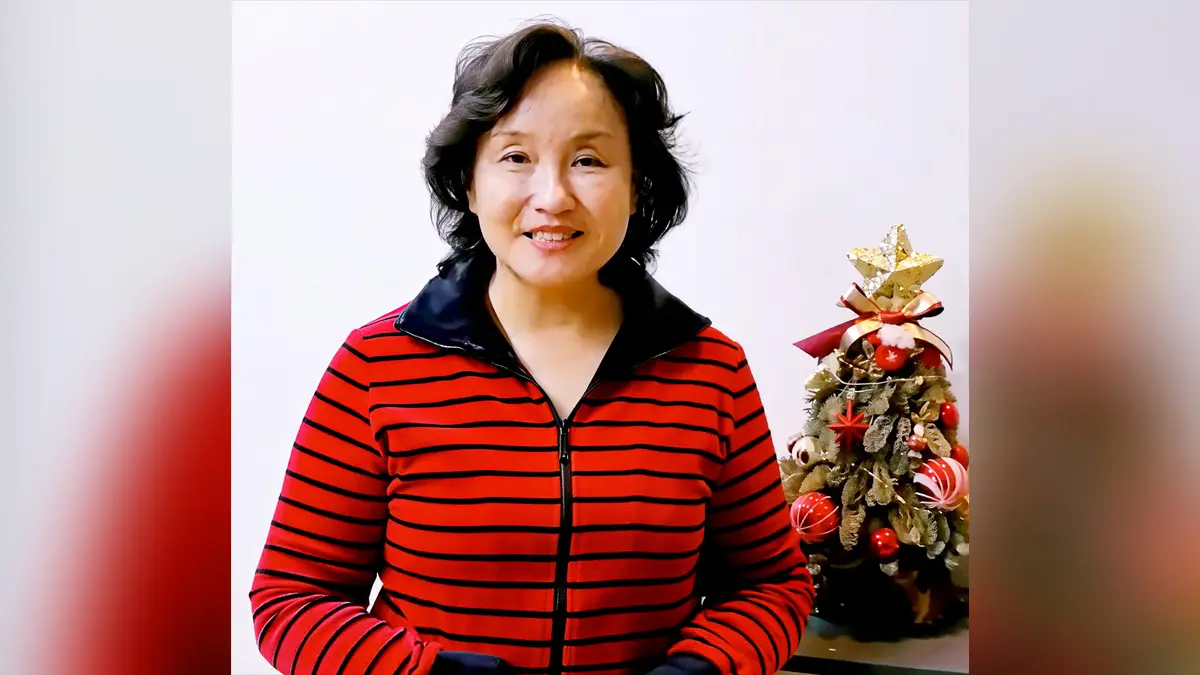
For a stretch in the 1980s, Lu Jing was one of the most familiar faces in China. She anchored Xinwen Lianbo, the flagship evening news program on CCTV, the national broadcaster, and hosted some of the era’s biggest events: the 1984 CCTV Spring Festival Gala and the first edition of the CCTV Young Singers Competition, a talent contest that helped launch several Chinese pop careers. In a country with only a handful of television channels, that kind of exposure made her a household name.
Her family background was equally unusual. Her father, Lu Shibi, was an academician of the Chinese Academy of Engineering and a founding figure in China’s domestic artificial joint industry. His work helped popularize artificial joint replacement surgery across the country, turning what had been a rare procedure into a routine option for patients with severe joint disease. The detail matters because of who she married: Zhao Qing, an associate professor at Beijing’s 301 Hospital, specializes in artificial hip and knee replacement surgery, the very field her father helped build.
How the two met has the quality of a folk tale. Chinese media describe their courtship as a bus encounter, a chance meeting that turned into a marriage. The story has circulated for years, and it is the kind of detail Chinese readers enjoy precisely because it sits so far from the polished image of a national news anchor.
In 1990, at the height of her fame, Lu Jing left China with her husband, who went to Sweden to study. She stepped away from the camera at a moment when most broadcasters would have held on. When the couple returned, she did not go back to the news desk. Instead she joined the Beijing Broadcasting Institute, now known as the Communication University of China, and became a teacher, training the next generation of presenters.
That second career is the quieter part of the story and arguably the more revealing one. China’s broadcasting industry expanded enormously in the 1990s and 2000s, and the people who built its talent pipeline were often former on-air figures who moved behind the podium. Lu Jing’s shift from national newsreader to university lecturer fits that pattern, though few of her peers had walked away at such a visible peak.
Her father’s legacy and her husband’s specialty also offer a window into how Chinese medicine professionalized. Artificial joint replacement was once a procedure associated with a handful of elite hospitals; the generation Lu Shibi trained helped make it standard care. Zhao Qing’s work at 301 Hospital, a military-linked institution known for treating senior figures, sits in that same lineage.
For global readers, the appeal is not gossip but the shape of a life. A famous face, a famous father, a marriage that began on a bus, and a decision to leave the spotlight for a classroom: these are the ingredients of a very Chinese kind of celebrity story, one where professional duty and family lineage carry as much weight as fame. Lu Jing’s name still surfaces in retrospectives of CCTV’s golden era, usually with the same note of surprise that she walked away so early.