A 150-Yuan Xiaomi Gadget Wants to Put Vibe Coding in Anyone's Hands
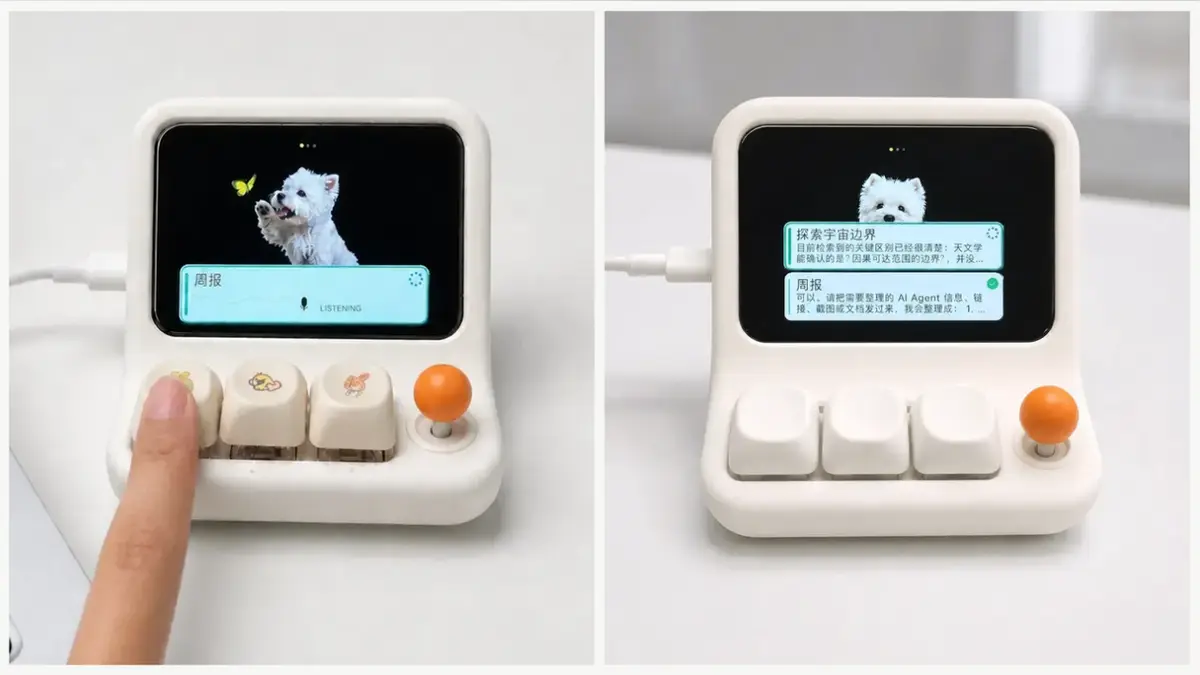
Xiaomi has quietly put a new kind of product on its shelves: an AI hardware kit priced at about 150 yuan, roughly the cost of a family takeaway dinner, built around the idea that anyone should be able to make their own smart gadget by describing it in ordinary language. The device emerged from a product push the company frames as vibe coding for the masses — a loose term for building software, or in this case hardware behaviour, by telling a model what you want instead of writing instructions yourself.
The kit is the interesting part because of who it is for. Most AI hardware launched in China over the past two years has been sold on specification sheets: faster chips, bigger batteries, more sensors. Xiaomi’s framing is the opposite. The buyer is not expected to understand a development environment. They are expected to say what they want the device to do — remind them, react to a sound, light up at a certain time — and let the model translate that into something the hardware can run.
That makes the price the headline. At 150 yuan the kit costs less than most of the accessories people already buy for their phones, which changes the experiment from a purchase decision into an impulse. It also sets expectations low enough that failure is survivable. A buyer who cannot get their idea to work has lost the price of a meal, not the price of a laptop.
Xiaomi is not the first Chinese company to chase this idea, but it is one of the largest consumer brands to try it. The company built its reputation on cheap, well-designed connected devices — speakers, bands, lamps, air purifiers — sold in enormous volume through its own stores and online channels. A hardware kit that turns customers into small-scale makers fits that model more naturally than a premium AI gadget would.
The tension is whether ordinary buyers actually want to make things. Vibe coding has spread quickly among developers and hobbyists, who use it to prototype apps and small tools. Whether the same appetite exists among people who have never opened a code editor is an open question, and the answer will shape how far the format travels beyond early adopters.
There is also the question of what the kit can realistically be taught to do. Small, cheap hardware has limited processing power and battery life, so the interesting behaviour likely depends on a connection to a phone or a cloud model. That keeps the cost down but adds friction: the device is only as capable as the software behind it, and that software has to keep working after the novelty wears off.
For global readers, the significance is less about one gadget than about a direction. Chinese consumer electronics firms are moving from selling finished products to selling the ability to assemble one, betting that AI lowers the skill barrier enough to make that appealing. If the format works, it could become a new entry point for hardware brands into households that would never otherwise buy a development board.
What to watch is whether the kit develops a community. Cheap maker hardware lives or dies on shared projects — templates, tutorials, ideas copied and improved. Xiaomi has the retail reach to put the kit in front of millions of people; whether those people build anything worth sharing is the part no price tag can guarantee.