China's Holiday EV Drivers Become Their Own Charging Dispatchers
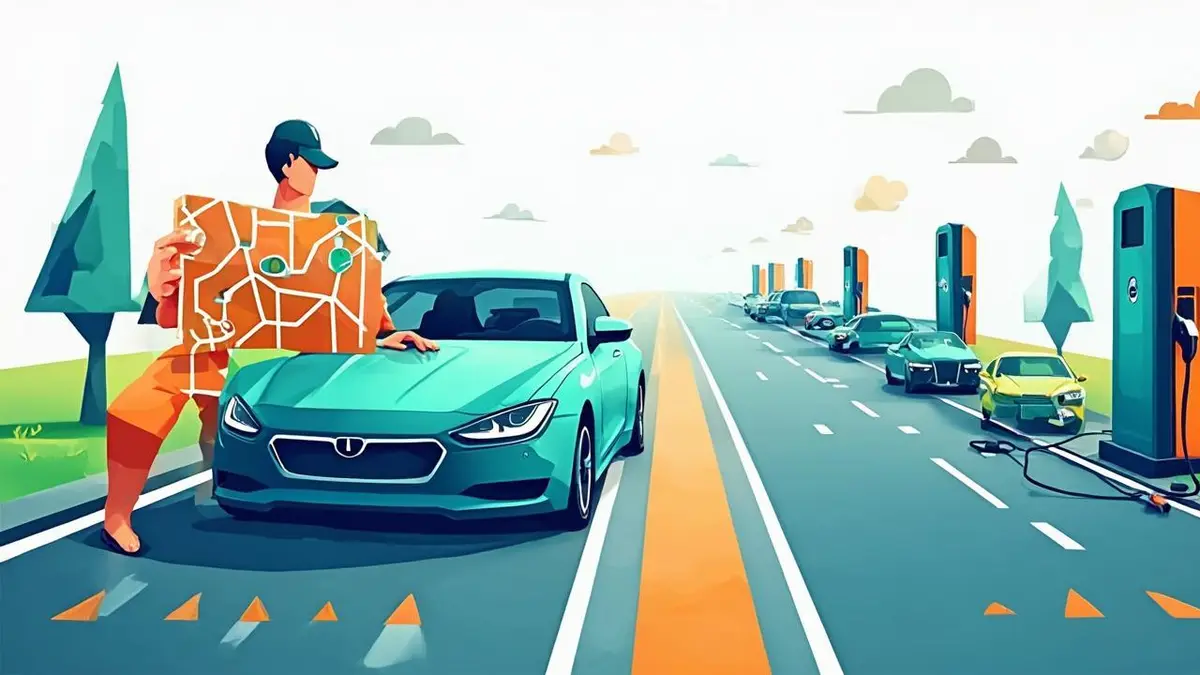
For most drivers leaving home during China’s National Day holiday, the journey begins with a glance at the navigation app: 720 kilometers, about eight hours and twenty minutes, and a mental checklist of traffic jams, meal stops and when a restless child will announce an urgent bathroom need. For electric-car owners, that same glance is only the opening move. The real work starts with the battery meter: 94 percent charge, which service area to aim for first, how much will be left on arrival, how many charging guns that station has, and whether the queue there is already longer than the one further down the road.
This year’s week-long break, which runs from the start of October, turned millions of Chinese households into amateur logistics teams. On social platforms, drivers traded screenshots of charging apps the way earlier generations swapped restaurant recommendations. The most valuable tips were not about the cars themselves but about timing: leave before dawn, charge while eating lunch, avoid the station everyone else has bookmarked. One widely shared post described the mindset as inventory management, with kilowatt-hours standing in for warehouse stock.
The numbers explain the caution. China now has the world’s largest public charging network, but holiday demand is concentrated into a handful of days and a handful of corridors, especially the expressways linking big coastal cities with inland hometowns. A station that sits idle on a Tuesday can have a two-hour line on the second day of a national holiday. Drivers who once worried about range anxiety have learned a subtler fear: arriving at a charger only to find it occupied, broken or reserved by an app they do not use.
Automakers and charging operators have responded with features that would have seemed exotic a few years ago. In-car systems now estimate not just how far a battery will take you but how long the wait at each candidate station is likely to be, pulling from live data. Some brands offer holiday booking, letting drivers reserve a plug in advance. Others send mobile charging trucks to the busiest service areas, a stopgap that turns a highway rest stop into a temporary power plant.
The behavior shift matters beyond one week of travel. China’s electric vehicle market has grown fast, and the charging experience is now a major factor in whether first-time buyers commit. A driver who spends a holiday queuing may still love the car but will tell friends about the queue. That word of mouth is why companies are pouring money into faster chargers, better maps and roadside services that treat a charging stop less like a chore and more like a rest break with coffee and a clean bathroom.
There is also a cultural adjustment underway. Chinese holiday travel has long been a test of patience, with crowded trains, packed scenic spots and gridlocked highways treated as unavoidable. Electric driving adds a new layer of planning, but it also gives travelers a reason to slow down, split the trip and spend money in towns they once passed through. Some drivers report discovering small restaurants and local attractions purely because a charger was there.
None of this makes the holiday stress disappear. Charging infrastructure still strains under peak demand, and rural routes remain thinner than the big city corridors. Yet the dispatcher mentality is spreading, and it is reshaping how Chinese families think about distance. The question is no longer whether an electric car can make the trip. It is who in the car gets to be the one checking the app, and whether anyone remembered to bring the charging cable adapter.
For global readers watching China’s electric transition, the holiday snapshot is a useful reality check. Sales figures show ambition; charging queues show the work still ahead. The country’s drivers are improvising solutions in real time, and the companies that learn from those improvised routines will be the ones selling cars to the next hundred million buyers.