AI Agents Get Employee ID Numbers at Shanghai Tech Hub
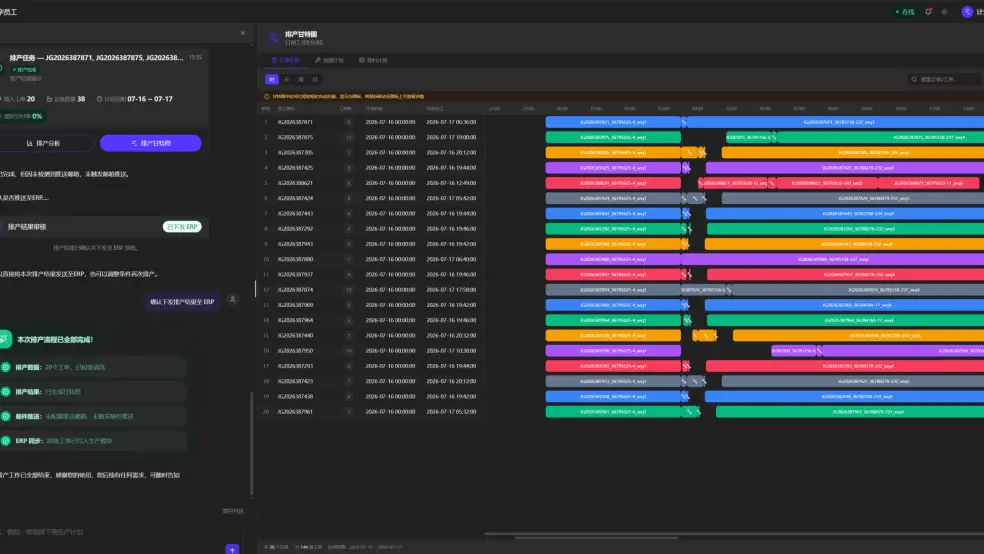
At a tech community in Zhangjiang, Shanghai’s main science park, a new platform has begun handing out something once reserved for humans: employee ID numbers. Since launching on August 31, the agent identity node management platform has issued digital identities to AI agents across 30 participating organizations, according to Chinese tech outlet Leiphone. Each agent receives a recognizable, trackable code that lets it be managed as a digital colleague rather than a loose tool sitting on someone’s laptop.
The shift sounds administrative, but it points to a real problem. When an AI agent was just a chatbot in a browser tab, nobody worried much about who was responsible for its output. Now agents can call across systems, trigger workflows and act on behalf of a person or a team. The moment they do, questions pile up: who assigns the task, who signs off on the result, and who answers if the agent makes a costly mistake?
Chinese companies are experimenting with an answer borrowed from ordinary office life. If an agent has an ID, it can be onboarded like a new hire, given a scope of duties, and held to a chain of command. Managers can see which agent did what, and when. The platform’s backers describe the goal as giving every agent a manageable digital identity, so that organizations can assign work and audit results without treating every automated action as an anonymous black box.
The idea reflects a broader pivot in China’s AI adoption. After two years of rushing to plug large language models into products, firms are running into the messy middle: agents that work in demos but stall in production because no one has defined ownership. Industry discussions increasingly frame the challenge as organizational rather than technical. The tools are capable enough; the management layer is what is missing.
That is where the ID scheme fits. It is less about surveillance than about paperwork — the digital equivalent of a staff roster, an org chart and a sign-off sheet. In a large company, dozens of agents might touch a single customer request. Without identities, tracing a bad outcome back to its source is nearly impossible. With them, the same request becomes an auditable trail.
The pilot also hints at how China’s AI industry may differentiate itself. While much global attention focuses on model benchmarks and raw capability, Chinese firms are investing heavily in deployment infrastructure: identity, permissions, logging and accountability. Those unglamorous layers often decide whether a technology spreads through real businesses or stays in pilot programs.
For global readers, the takeaway is simple. The next phase of the AI boom may be less about smarter agents and more about well-managed ones. If agents are going to be treated as digital colleagues, they will need the same things human colleagues have: a name, a role, a boss and a paper trail. Shanghai’s experiment is one early attempt to build that office.
Whether the ID system spreads beyond the pilot remains to be seen. But the questions it raises are universal. Every company deploying agents will eventually have to answer who is in charge — and the answer may look a lot like a staff number.