OnePlus 16 Won't Get 185Hz Everywhere, and That's on Purpose
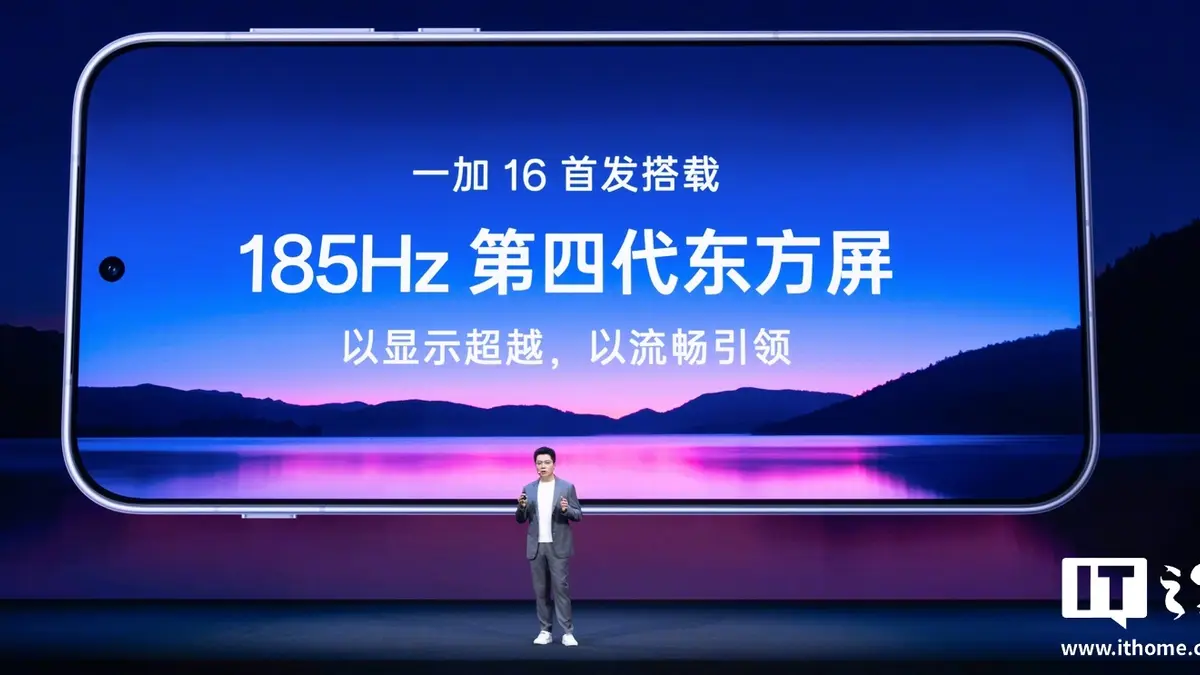
Phone launches have long been a numbers game: more megapixels, more cores, more hertz. OnePlus is testing whether buyers will accept a smaller number on the box if the phone feels better in the hand. On October 11, Li Jie, president of OnePlus China, fielded questions in the comments of his Weibo post about the OnePlus 16, the company’s next flagship, and the answer he gave was unusually blunt for an industry that usually promises everything at once.
The question was about refresh rate, the speed at which a display redraws itself. Higher numbers make scrolling and animation look smoother, so the marketing race has pushed phones from 60Hz to 120Hz and beyond. Some had expected the OnePlus 16 to run 185Hz across the entire interface. Li Jie said that is not happening, and gave a reason rather than a slogan: a screen that stays at 185Hz all the time would drag on battery life, generate more heat, and compromise image quality. Current display technology, he said, cannot hold all of those things at once.
His framing was that OnePlus is prioritizing experience over raw specifications. The company argues the best everyday result today is a global 165Hz mode, a rate that can stay switched on for the interface as a whole rather than flickering in and out for a few apps. He invited users to compare the OnePlus 16 against rival phones themselves rather than trust the spec sheet.
The phone’s screen comes out of a partnership with BOE, one of China’s largest display makers. The two companies held a technology briefing for their fourth-generation Oriental Screen on October 9, where the panel’s capabilities were introduced ahead of the launch. That collaboration matters because high refresh rates are not just a software switch; they depend on the panel, the driver circuitry and the power budget working together.
Refresh rate has become an awkward battleground. It is easy to market and easy to measure, which encourages companies to push a peak figure that only appears briefly in a benchmark or a single game. Users have learned to be skeptical, and reviewers now test whether a high rate holds steady during long sessions or collapses under heat. OnePlus is effectively betting that its customers care more about consistency than about the largest possible number.
The trade-off is real. A phone that runs its interface at a constant high rate draws more power, and a flagship is already spending heavily on cameras, chips and AI features. Heat is the harder constraint: a display that never throttles can make a device uncomfortable and shorten the life of nearby components. Choosing 165Hz globally is a way of saying the ceiling is not the point.
What happens next is up to buyers. If the OnePlus 16 sells well without the headline figure, other Chinese phone makers may quietly follow, and the refresh-rate arms race could slow. If rivals keep advertising bigger numbers and win on the shelf, OnePlus may find itself explaining a decision that cost it a talking point. Either way, the company has made an argument worth watching in a market where specifications have long stood in for quality.