Musk Says SpaceXAI Will Become SpaceXSI as 'Super Intelligence' Talk Spreads
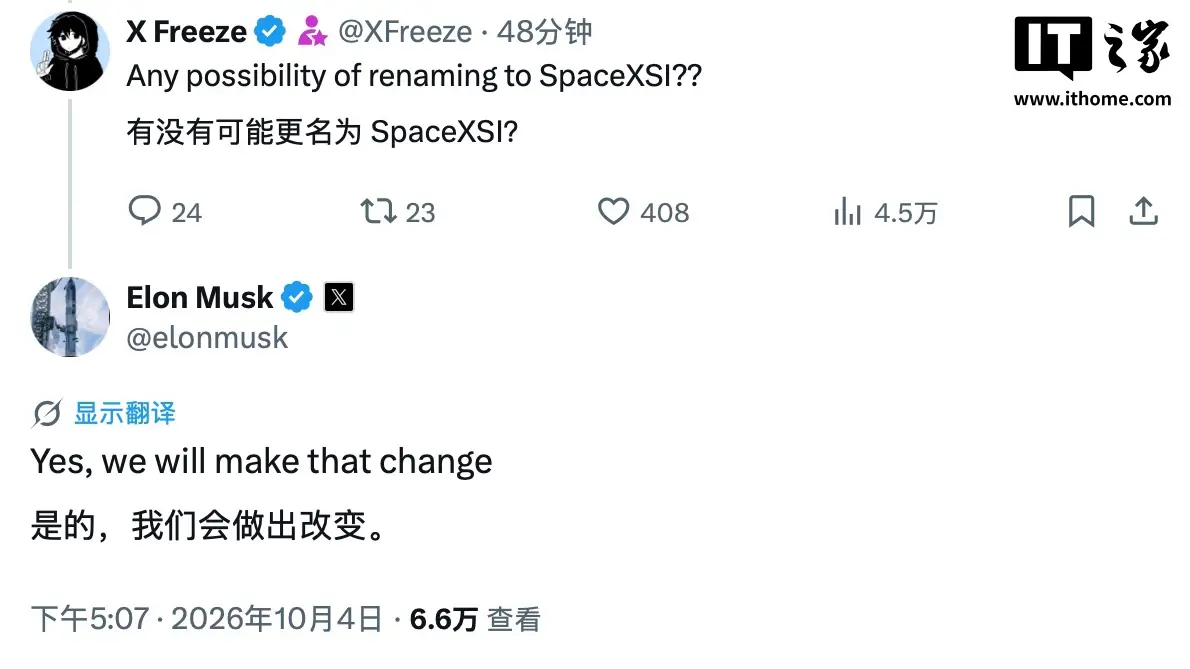
Elon Musk has said he will rename his artificial intelligence unit SpaceXAI to SpaceXSI, swapping the familiar “AI” label for “SI” — short for super intelligence. The exchange began when a user on X asked Musk whether the company might make the change. “Yes, we will make that change,” Musk replied, adding that “it’s better not to call it AI anymore, call it SI.”
The comment landed on the same day that US President Donald Trump announced the creation of a “Super Intelligence Force” (SIF), a federal working group meant to coordinate how Washington deals with the fast-moving field. According to state media reports, the group is designed to connect the federal government with consumers, public interest groups, religious organizations, critical infrastructure providers and the companies building super intelligence systems.
The naming shift did not appear out of nowhere. On September 29, the US president signed an executive order directing all executive departments and agencies to use the term “super intelligence” instead of “artificial intelligence” in official communications. The change is largely semantic, but it signals how governments and companies are trying to frame the next stage of machine intelligence — as something more powerful, and more consequential, than the chatbots and image generators the public already knows.
For Musk, the renaming fits a pattern of rebranding his ventures around ambitious, futuristic language. SpaceX remains privately held and best known for reusable rockets and satellite internet, but the company has expanded its ambitions into artificial intelligence, satellite communications and, more recently, orbital data infrastructure. Folding an AI brand under the SpaceX umbrella — and then renaming it — keeps the narrative tied to exploration and scale rather than to the crowded field of everyday AI tools.
Language matters in technology because it shapes regulation, investment and public expectations. “Artificial intelligence” has become a catch-all phrase that covers everything from spam filters to large language models. “Super intelligence” implies systems that could outperform humans across most cognitive tasks, a prospect that has attracted both excitement and caution from researchers, investors and policymakers. By adopting the term, companies and governments are effectively raising the stakes of the conversation.
Whether the rename will stick is another question. Musk has a long history of changing product names, timelines and priorities, and the AI industry itself is still searching for stable vocabulary. Some researchers prefer terms like “frontier models” or “advanced AI,” which sound technical rather than dramatic. Others argue that the industry needs a clearer public language to explain what these systems can and cannot do.
What is clear is that the race to build and define advanced AI is now as much about branding and policy as it is about chips and algorithms. A federal task force, an executive order on terminology and a high-profile rebrand by one of the world’s most followed entrepreneurs all point in the same direction: the next chapter of computing will be argued over in boardrooms, newsrooms and government offices, not just in research labs.