Joseph Minala: The Fake News That Said a 17-Year-Old Was 42
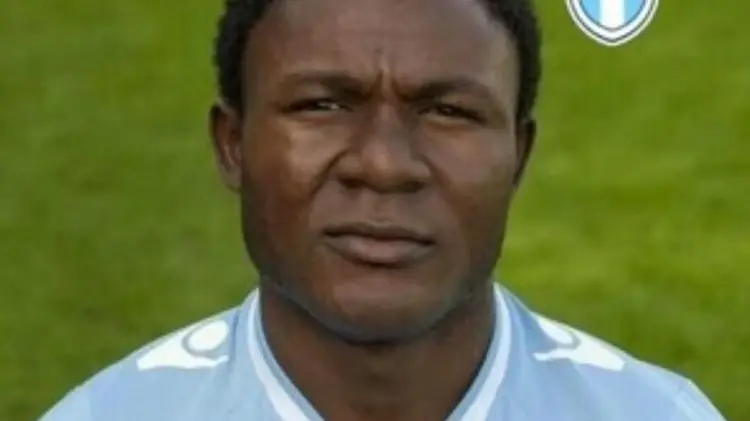
In 2014, Joseph Minala was one of the brightest prospects in Lazio’s youth academy, a tall, powerful midfielder with a future in Italian football. Within weeks, a rumor that had nothing to do with his ability was dominating search results about him: that he was not a teenager at all, but a 42-year-old man using a false identity. The claim spread through blogs, forums and social feeds, and it has never quite let go.
Now 30, the Cameroonian midfielder has given an interview to the Argentine newspaper Ole looking back at the episode. His view is blunt. His career, he suggested, should not have ended up where it has, and Lazio at the time did not protect him. He was 17 years old when the story went global, far from home, and largely left to answer for a lie he had no part in creating.
The mechanics of the rumor say a lot about how the internet works. Search engines are built to surface the freshest material, but algorithms also keep pushing older, heavily clicked articles back into view whenever someone types a name. A story that was once widely shared can effectively become part of a person’s identity, resurfacing years later alongside the accurate results. For a young athlete trying to build a reputation, that is a strange and durable kind of damage.
Minala’s case became a cautionary tale in European football. Age disputes do happen in the sport, and federations have procedures for testing them, but here the accusation was never a formal finding — it was a rumor that traveled faster than any correction could. The player’s youth record, his registration and his obvious physical development as a teenager were all available; the viral version simply outran them.
His career since has been itinerant rather than spectacular. He never became the fixture in Lazio’s first team that his youth performances hinted at, and he has since played for a string of clubs in Italy and elsewhere. Whether the rumor genuinely cost him opportunities is impossible to prove, but the psychological weight of being a punchline before turning 18 is easier to imagine than to measure.
What makes the interview resonate beyond football is how familiar the pattern is. Anyone whose name becomes attached to a viral falsehood — a mistaken photograph, a misread document, a joke that escaped its context — knows that the correction rarely travels as far as the claim. Search results and social feeds are not archives of truth; they are archives of attention.
Minala’s tone in the interview is less angry than resigned, with a thread of grievance aimed at the club that should have shielded a teenager. It is a reminder that talent development is not only about tactics and training hours. Young players arriving from abroad are especially exposed, and the institutions around them carry a duty of care that a press release issued years too late cannot discharge.
He is 30 now, still playing, still asked about a lie told when he was a boy. The interview is a small attempt to put his own account on the record — and perhaps to nudge the algorithm, at last, toward the truth.