The Sponsor List That Tells 20 Years of Chinese Consumption
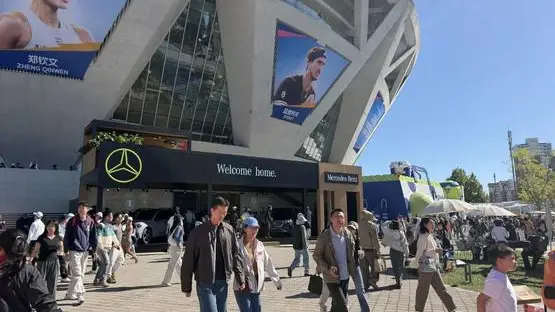
The China Open, Beijing’s flagship tennis tournament, quietly made history this summer. At the end of June it held its global launch event at Wimbledon — the first time the tournament had staged such a pitch on the grounds of the sport’s most famous venue. There, organizers announced that HSBC Group would become the event’s lead sponsor starting in 2026, carrying the title Presenting Partner.
For longtime followers of the tournament, the news landed with a jolt. For close to twenty years the person standing on Diamond Court delivering the lead sponsor’s speech had come from Beijing Benz, the German carmaker’s Chinese joint venture. As recently as the 2025 China Open opening ceremony, a Beijing Benz executive was still on stage. Now a bank takes the microphone.
Read as a business story, the swap is more than a logo change. A sponsor list is a kind of ledger of what Chinese consumers are spending on, and the entries have shifted with the decades. In the 2000s, the marquee names around Chinese sport were often automakers, breweries and telecom carriers — industries selling big-ticket goods to a fast-rising middle class.
By the 2010s, the mix had widened. Sportswear brands, smartphone makers, airlines and insurers crowded in, chasing younger audiences who watched matches on phones as much as in stadiums. Sponsorship stopped being pure signage and became content: branded mini-documentaries, player collaborations, courtside activations built for social feeds.
The 2020s brought a different logic again. Financial institutions, payment platforms and lifestyle brands now treat a tennis fortnight as a way to reach affluent urban households — the same customers they want for wealth products, credit cards and travel perks. A global bank backing a Beijing tournament fits that pattern neatly: tennis skews upscale, and the China Open draws a cosmopolitan crowd.
Tennis itself has grown in China over the same period. The country has produced Grand Slam champions and a steady pipeline of tour-level players, and participation on public courts has risen in cities from Shanghai to Chengdu. That grassroots growth makes the tournament attractive to sponsors who want more than a two-week advertising window; they want a year-round association with an aspirational sport.
There is also a symbolic layer. Moving the announcement to Wimbledon signals ambition — a Chinese tournament positioning itself in the global tennis conversation rather than only the domestic one. For HSBC, which has long used tennis sponsorship worldwide, the deal links its international identity to one of Asia’s biggest events. For Beijing Benz, the end of the run marks the close of an era in which a single automaker could define a tournament’s public face.
None of this happens in a vacuum. Sponsorship budgets follow consumer confidence, and the categories willing to pay top dollar for visibility tend to be the ones expecting growth. When carmakers lead, it says something about household spending. When banks and lifestyle brands lead, it says something else. The China Open’s new name on the microphone is a small, specific clue about which way that money is moving now.