A 400,000-Bottle Anti-Aging Pill Empire Meets Chinese Regulators
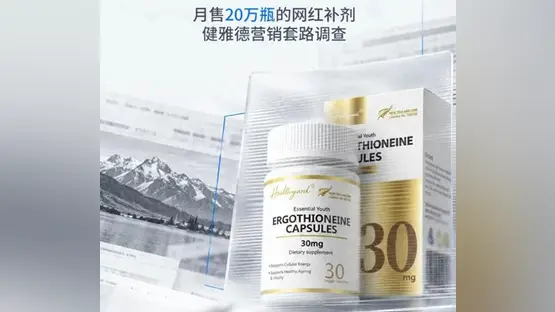
A supplement brand that sold itself as premium New Zealand anti-aging science has become the latest flashpoint in China’s long-running argument about whether the booming health-products aisle is selling results or reassurance. The brand, marketed under the name Healtheyard, built its reputation on imported-sounding positioning and claims of slowing the aging process, and it moved enough volume — hundreds of thousands of bottles — to become a fixture in Chinese online shopping feeds.
The pattern is familiar to Chinese consumers. A product borrows the language of laboratory science, attaches a foreign origin story, and then leans on livestream hosts and short-video testimonials to convert curiosity into repeat purchases. When scrutiny arrives, the questions tend to be basic: what is actually in the bottle, what evidence supports the anti-aging claim, and who verified the imported pedigree. Consumers quoted in Chinese coverage reacted with weary frustration rather than surprise, a sign of how often this script has played out.
That fatigue is the real market problem. China’s supplement sector has grown fast on the back of an aging population, rising disposable income and a young cohort that treats preventive health as a lifestyle purchase rather than a medical one. But trust has not kept pace. Each high-profile case of exaggerated claims or murky sourcing makes shoppers more cynical about the entire category, including the legitimate end of it — the vitamin brands, the clinically studied ingredients, the products that do what they say.
Into that gap has stepped a different model: subscription nutrition services that promise to stop people from over-supplementing. One such service, marketed as a personal nutrition diary, has reportedly signed up a substantial user base within months of launch on a simple pitch — pay a modest monthly fee for a private nutrition manager, and take fewer, better-targeted pills instead of a shelf full of them. It is a smart inversion of the industry’s economics. Instead of selling more bottles, it sells judgment about which bottles are worth buying.
Whether that works depends on a question the industry has never answered well: who is actually giving the advice, and what they are qualified to say. A nutrition manager behind a mini-program is not a physician, and personalized recommendations sit awkwardly between wellness coaching and medical advice. The same regulatory gray zone that let supplement brands make expansive claims now surrounds the services claiming to protect consumers from those claims.
For global readers, the story is a preview. China’s supplement market is one of the world’s largest and most digitally driven, and the tactics that succeed there — livestream persuasion, imported mystique, subscription convenience — travel quickly. Brands elsewhere are watching how Chinese consumers learn to verify what they swallow, because that skepticism tends to be exported along with the products.
The immediate lesson is less about one brand than about the arbitrage between scientific vocabulary and scientific evidence. Anti-aging is a particularly tempting frontier, because the biology is genuinely active research and the marketing can borrow its credibility without borrowing its rigor. Claims about slowing cellular aging are hard to test, expensive to prove and easy to imply.
What happens next will be watched closely by everyone selling in the category. Regulators have been tightening rules on health claims and imported labeling, and platforms face pressure to police the testimonials that drive sales. The more telling signal may be consumer behavior: if subscription-style nutrition advice keeps growing after the headlines fade, it would suggest Chinese shoppers are ready to pay for restraint rather than for another bottle.